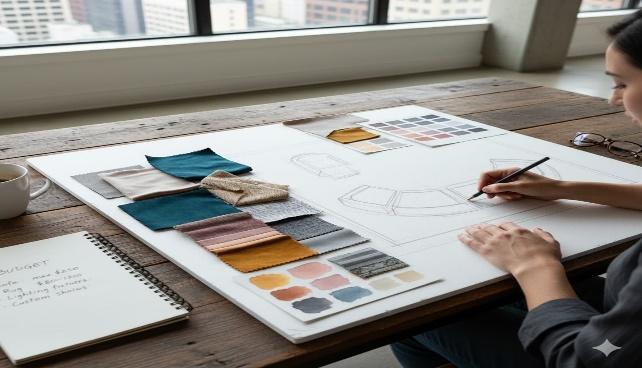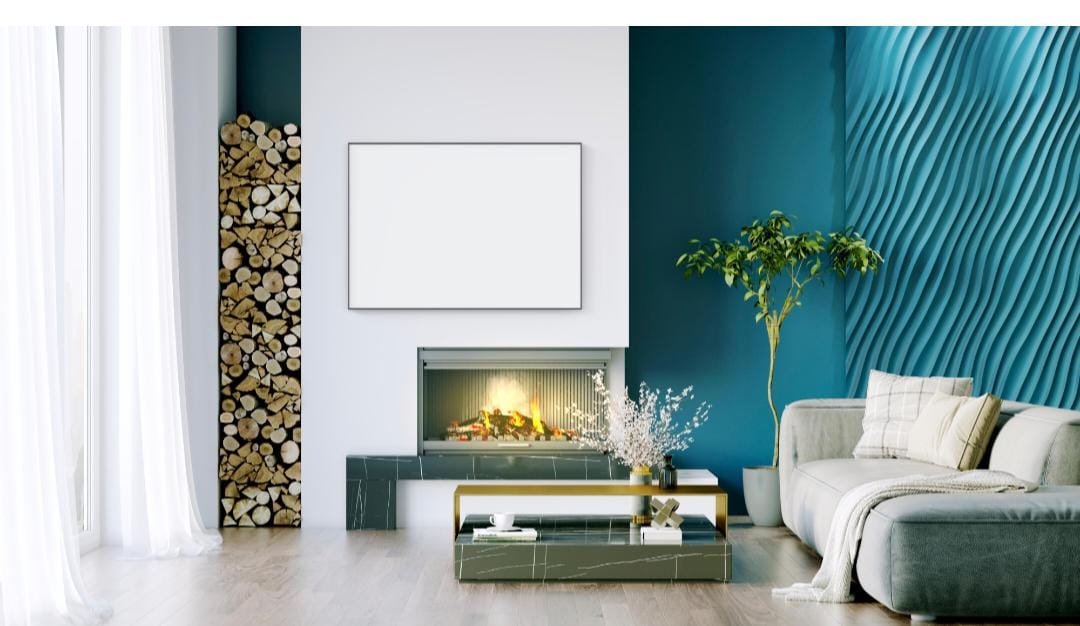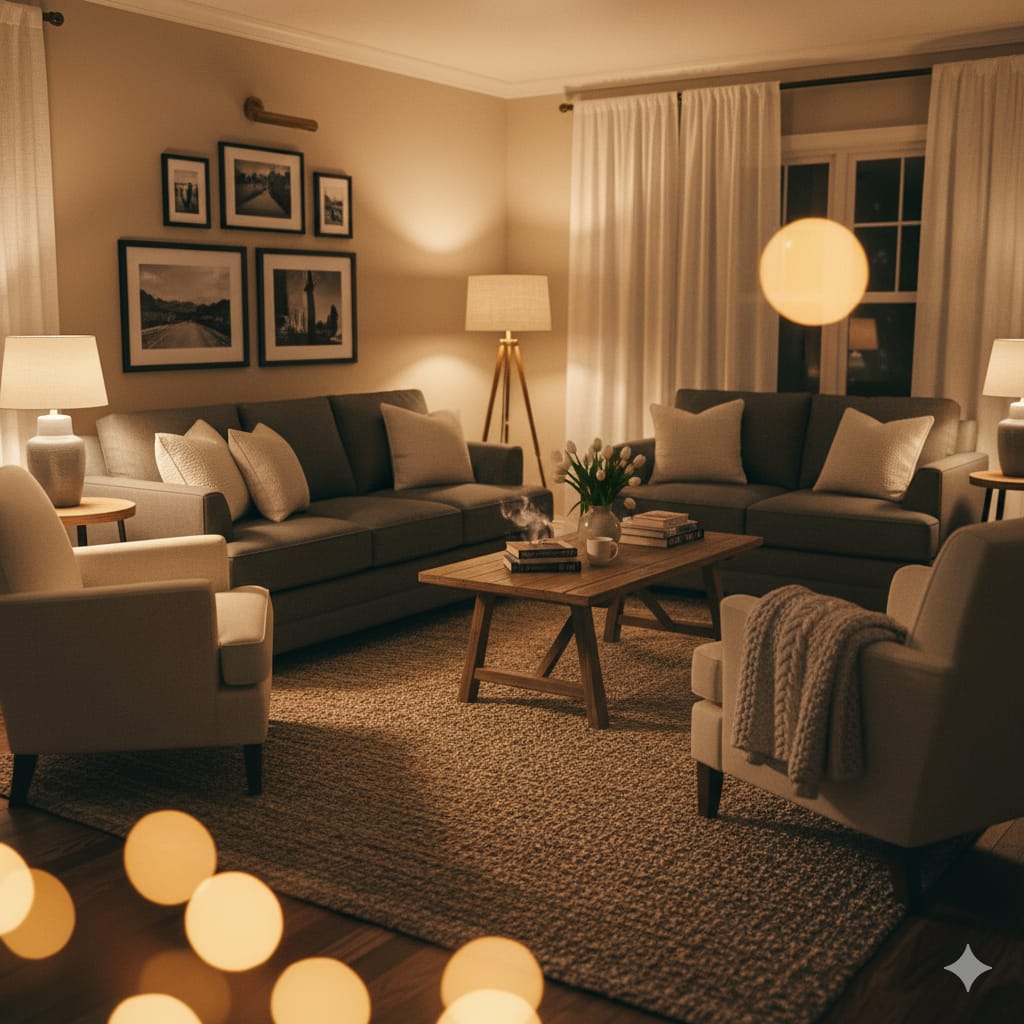
Learn how to rearrange furniture for better flow and comfort. Smart layout tweaks that make your space feel bigger, calmer, and more inviting—no new furniture needed.
Why Flow Changes Everything
You know that feeling—you walk into a room and something’s just… off. Too cramped. Too empty. Or maybe it’s just been the same for way too long.
That sofa? It’s been in the same spot since forever. The coffee table? Always in the way. And the energy? Stuck.
Here’s the thing—you don’t need new furniture. You just need a fresh layout. A few smart moves can open up space, make the room easier to live in, and help it feel more like you.
Human moment: Rearranging isn’t about design rules. It’s about making your space feel better—for you. Fixing Squeaky Doors and Floors
Step 1: Clear the Pathways
Start with movement. Can you walk through the room without dodging corners or squeezing past chairs? 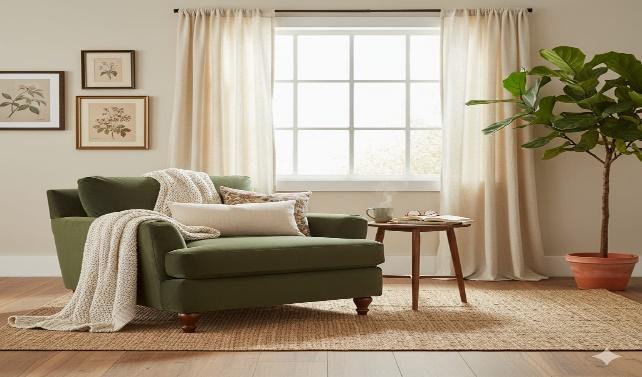
- Leave 80–90 cm between major pieces so people can move freely.
- Keep doorways and windows clear—don’t block natural light or access.
- In small spaces, try floating furniture slightly away from the walls. It sounds counterintuitive, but it actually makes things feel more open.DIY Window Treatments: Curtains & Blinds
Step 2: Find Your Focal Point
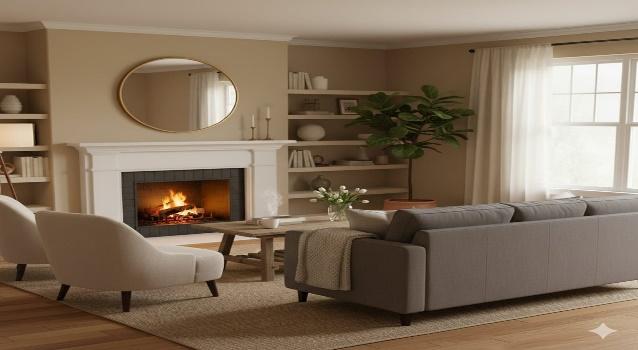
Every room needs a center—something that anchors the layout.
- In living rooms, it’s usually the TV, fireplace, or a big window.
- In bedrooms, it’s the bed.
- In dining areas, it’s the table.
Once you’ve found it, arrange your furniture to face or frame that point. It helps everything feel more intentional and balanced. Creating a Feature Wall with Paint or Wallpaper
Step 3: Group for Conversation
Furniture isn’t just there to fill space—it’s there to bring people together.
- Pull chairs and sofas closer. If you have to raise your voice to talk to someone across the room, they’re too far.
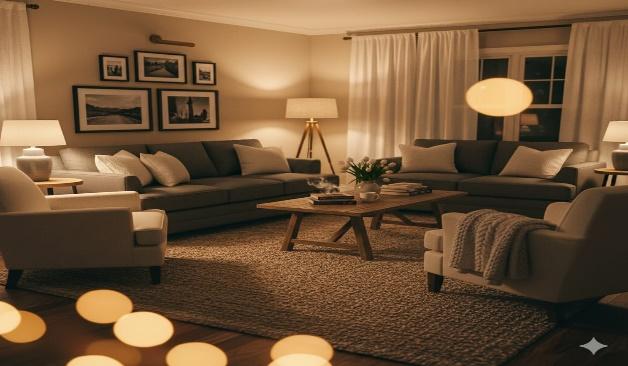
- Use a rug to define the zone. It anchors the seating and makes everything feel like one cozy spot.
- Add a coffee table or pouf. Something in the middle helps ground the setup and gives people a place to land—drinks, books, feet, whatever.
Real moment: If your guests always end up shouting across the room, this is your fix. Move things in. Make it feel like a conversation, not a lecture. Choosing the Right Adhesive for Your Project
Step 4: Balance the Room
Have you ever walked into a room and felt like everything’s pulled to one side? Even if you can’t explain it, you know something’s off. 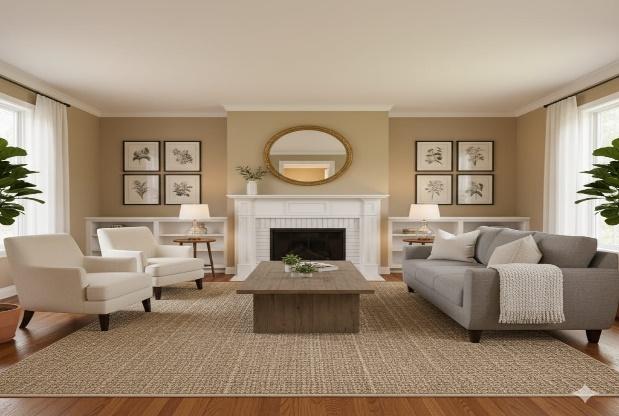
- Spread things out. If one corner’s doing all the heavy lifting, shift a few pieces to the other side.
- Mix heights. A low sofa next to a tall bookshelf keeps the eye moving and adds rhythm.
- Fill blank walls. A mirror, a piece of art, even a hanging plant—they help balance the space and make it feel complete.
Human moment: You don’t need symmetry. You just need the room to feel steady — like it’s not tipping over.
Step 5: Try Angles and Unexpected Moves
You don’t have to push everything flat against the wall. Seriously—that “furniture hugging the edges” look? It can make a room feel stiff and lifeless.
- Try angling a chair in the corner. It softens the space and makes it feel more relaxed—like someone actually lives there.
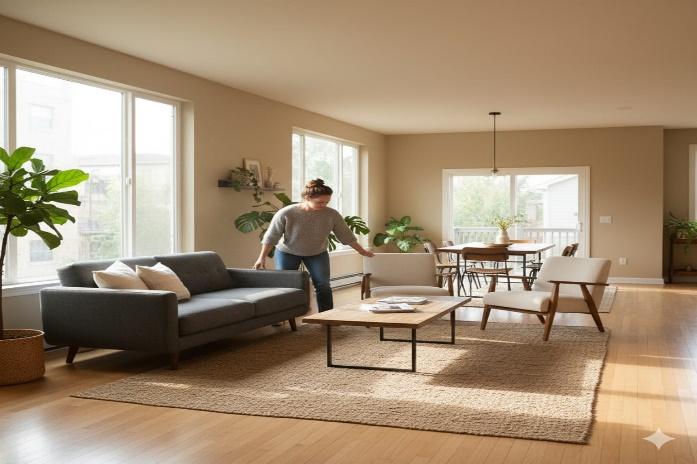
- Float the sofa forward a little. That small gap between the wall and the back of the couch? It adds depth and makes the layout feel intentional.
- Swap pieces between rooms. That armchair you barely use in the bedroom? Try it in the living room. You might be surprised how well it fits—and how fresh the space feels.
Human moment: Some of the best layouts happen when you stop planning and just start moving things around. No rules. No pressure. Just play.
Final Touches That Help the Flow
- Once the big pieces are in place, it’s time to finesse the space. This is where the room starts to feel less like a layout and more like home.
- Add a side table next to your favorite chair. Somewhere to drop your coffee or a book.
- Tuck a floor lamp into that dark corner. It’ll warm things up and help guide the eye.
- And please—keep the floor clear. A couple of baskets or trays can catch the clutter without making the room feel messy.
Real-life tip: If you’re constantly shifting things around just to walk through the room, it’s a sign something needs to move—not you. DIY Lighting Ideas for Kitchens
Final Thoughts
Rearranging furniture isn’t about getting it perfect. It’s about how the space feels when you walk in. Can you move freely? Does it feel calm? Does it feel like you?
Shift a chair. Pull the sofa forward. Try something new—then sit with it. Literally. See how it feels.
Human moment: When the layout flows, everything else follows. The room feels easier. Warmer. More like you.