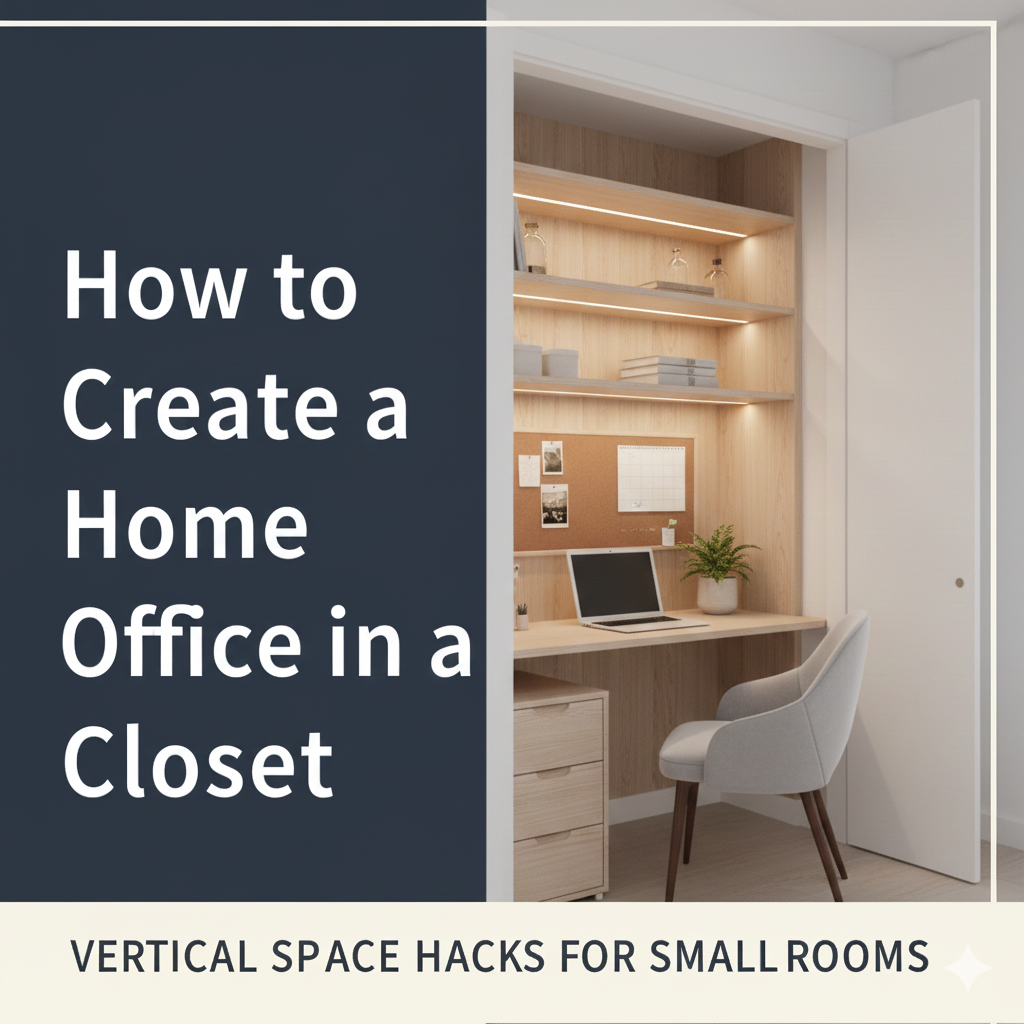
 Working from home has become part of everyday life, but not everyone has a spare room to dedicate to an office. That’s where the clever idea of a “cloffice”—a closet office—comes in. By transforming even the smallest closet into a functional workspace, you can carve out a private nook that feels organized, inspiring, and uniquely yours. This isn’t just about squeezing a desk into a tight spot; it’s about designing a space that supports focus, comfort, and creativity.
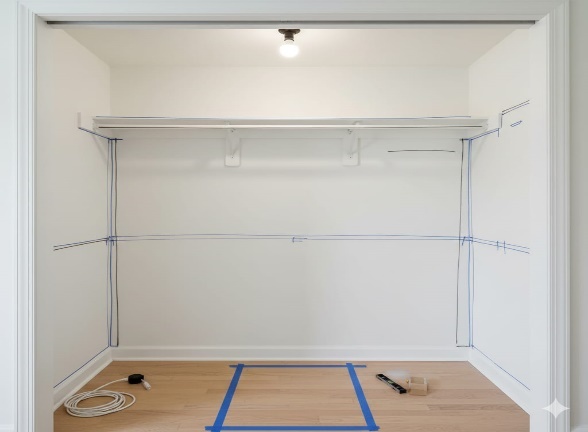 Step 1: Clear and Measure the Space
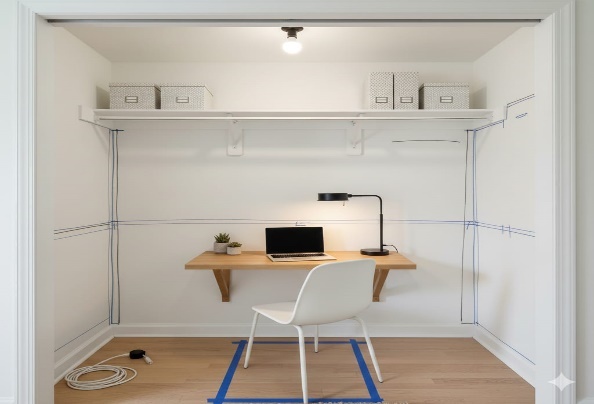
Start by emptying the closet completely. Take a moment to really look at it—the width, depth, and height. These dimensions will guide every decision you make, from the size of the desk to the type of chair.
For guidance, see Small Room Design Hacks That Actually Work.
 Step 2: Choose a Compact Desk
The desk is the heart of your cloffice. A wall‑mounted surface, a fold‑out table, or a slim console can work wonders in tight quarters.
For inspiration, check Designing a Productive Home Office Setup.
Step 3: Add Proper Lighting
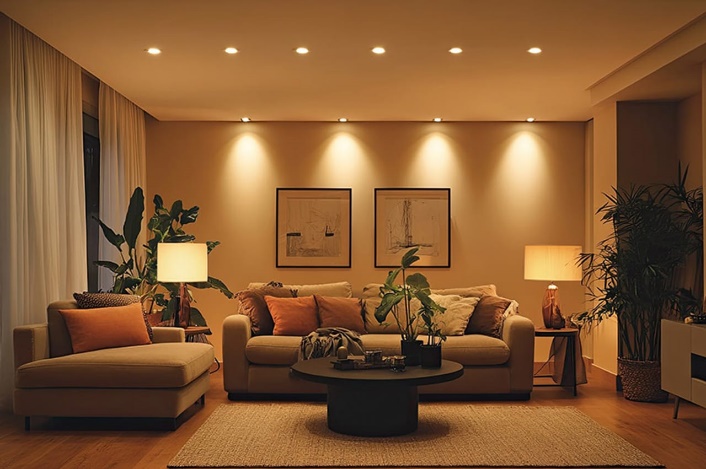
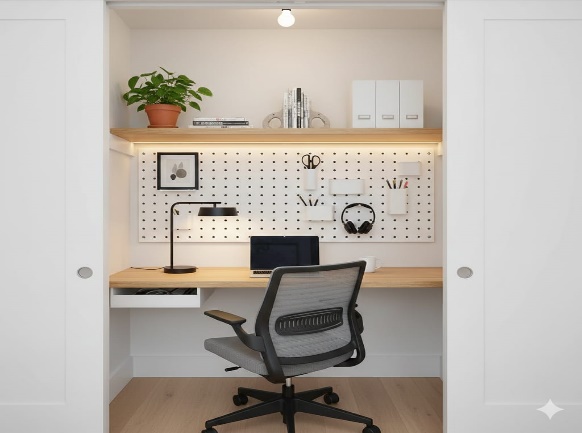
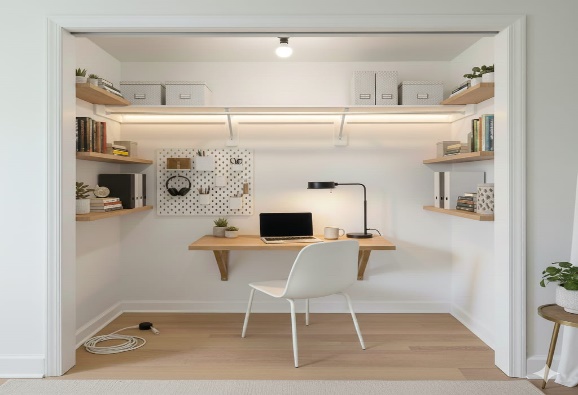 Closets are rarely designed with lighting in mind, so this is one of the most important upgrades. Good lighting isn’t just practical; it sets the mood. Install LED strips under shelves, add a small desk lamp, or mount sconces on the wall.
For ideas, see DIY Accent Lighting Ideas.
Step 4: Maximize Vertical Storage
When floor space is limited, walls become your best friend. Add shelves above the desk for books, files, or decorative items. Pegboards or wall organizers are perfect for keeping supplies handy without cluttering the desk.
For guidance, see Styling Open Shelves with Purpose.
.
Step 5: Choose a Comfortable Chair
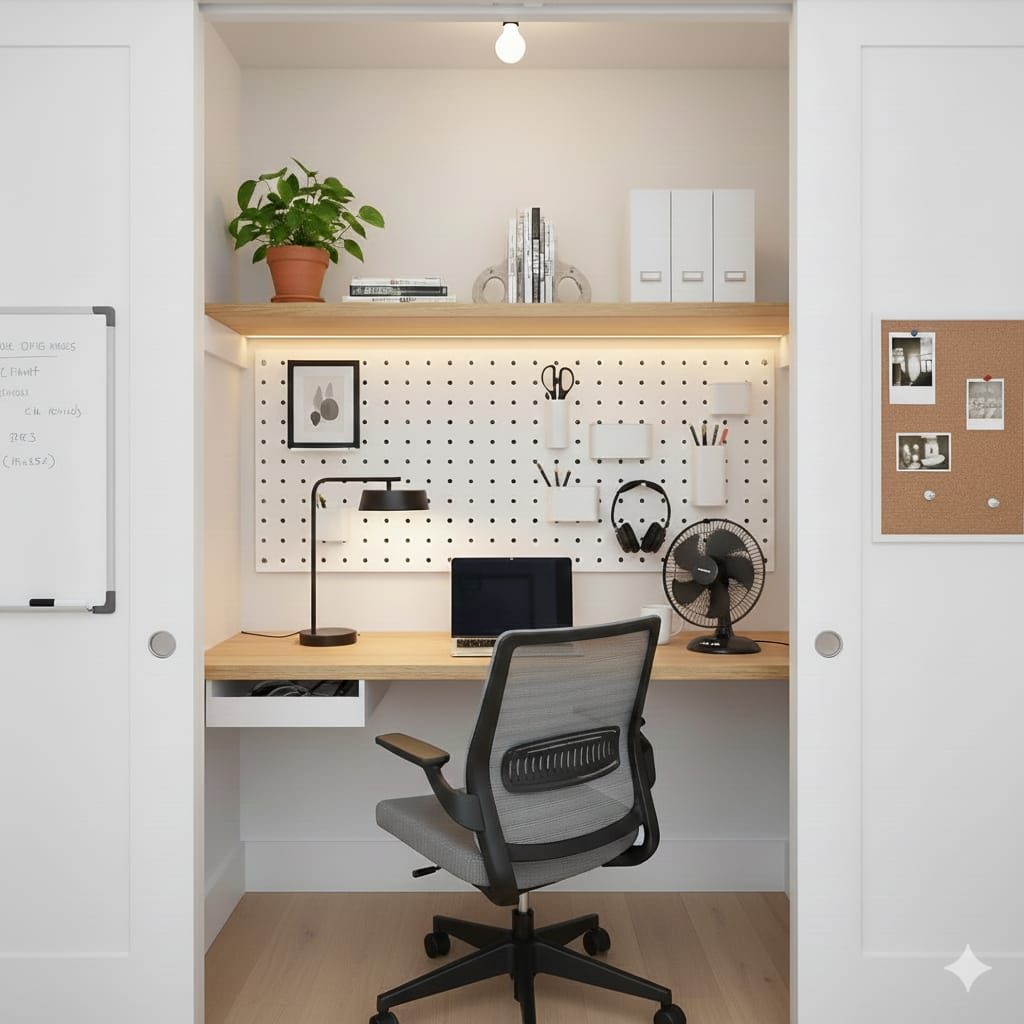
Even in a closet, comfort matters. Don’t settle for a chair that looks cute but hurts your back. Opt for a compact ergonomic chair or a stool that can slide under the desk when not in use.
 Step 6: Keep Cables Organized
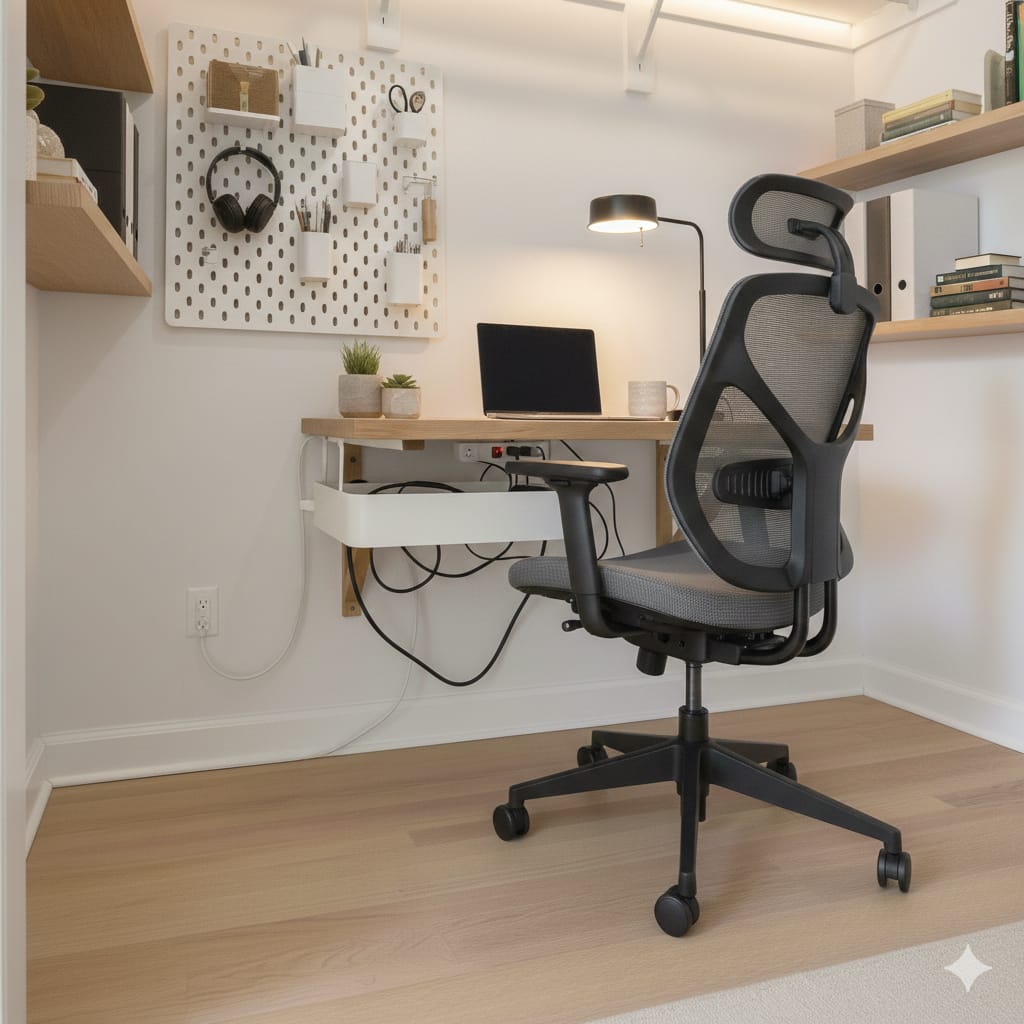
Nothing ruins a small space faster than tangled cords. Use cable clips or trays, or go wireless with your keyboard and mouse.
For guidance, see Organizing Small Spaces Without Sacrificing Style.
Step 7: Personalize with Decor
Here’s where the human touch comes in. Add framed photos, a small plant, or a corkboard with inspirational quotes. These details transform the cloffice from a purely functional nook into a space that reflects your personality.
For ideas, see Wall Art Placement Rules Designers Swear By.
 Step 8: Use Doors Creatively
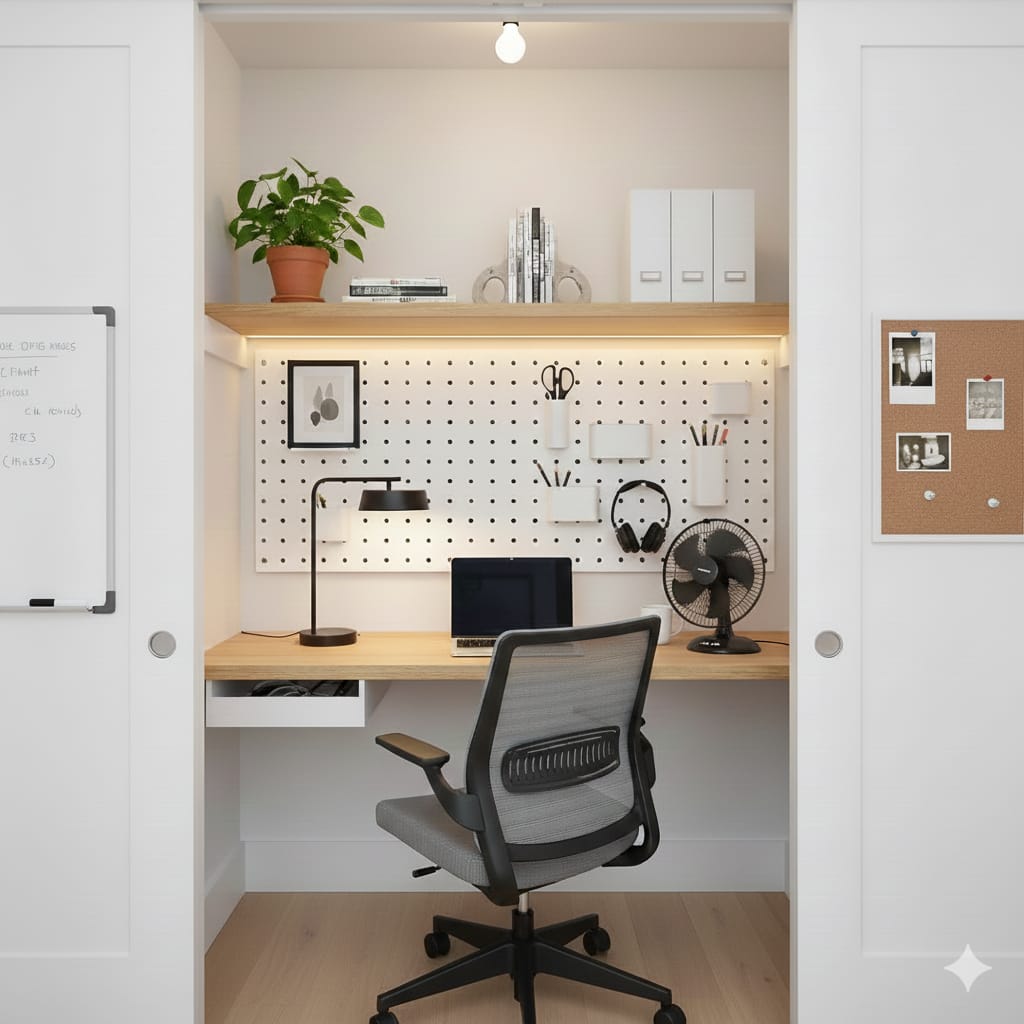
Closet doors can be part of the design. If you want privacy, keep them closed while you work. If you prefer openness, remove them entirely to integrate the cloffice into the room. You can also use the inside of doors for storage—hang organizers, calendars, or even a whiteboard.
For inspiration, check out DIY Decor Projects That Make a Big Impact.
Step 9: Ensure Ventilation
Closets can feel stuffy. Keep the doors open when possible, or add a small fan to improve airflow.
 Step 10: Keep It Flexible
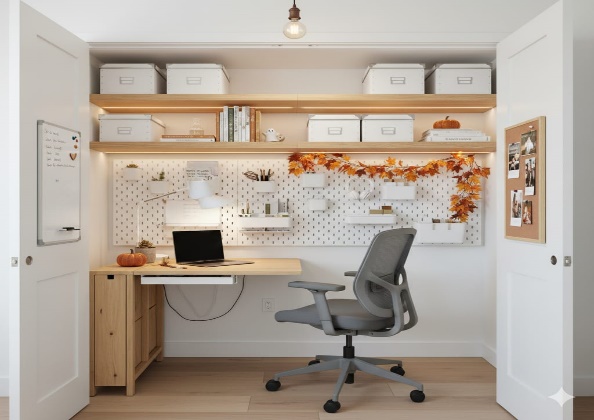
One of the best things about a cloffice is its adaptability. Use it as a workspace during the day, then repurpose it for hobbies or storage at night. Flexibility ensures the space continues to serve your needs as they evolve.
For guidance, see Seasonal Decorating Ideas for Every Room.
Final Thoughts
Turning a closet into a home office is more than a clever hack; it’s a way to reclaim space and create a personal sanctuary for productivity. With smart lighting, vertical storage, a comfortable chair, and personal touches, you can design a cloffice that feels both functional and inspiring.
The beauty of this idea is that it proves productivity isn’t about square footage—it’s about thoughtful design and a human touch. Done right, your cloffice will be a small but mighty space that supports focus, creativity, and comfort every day