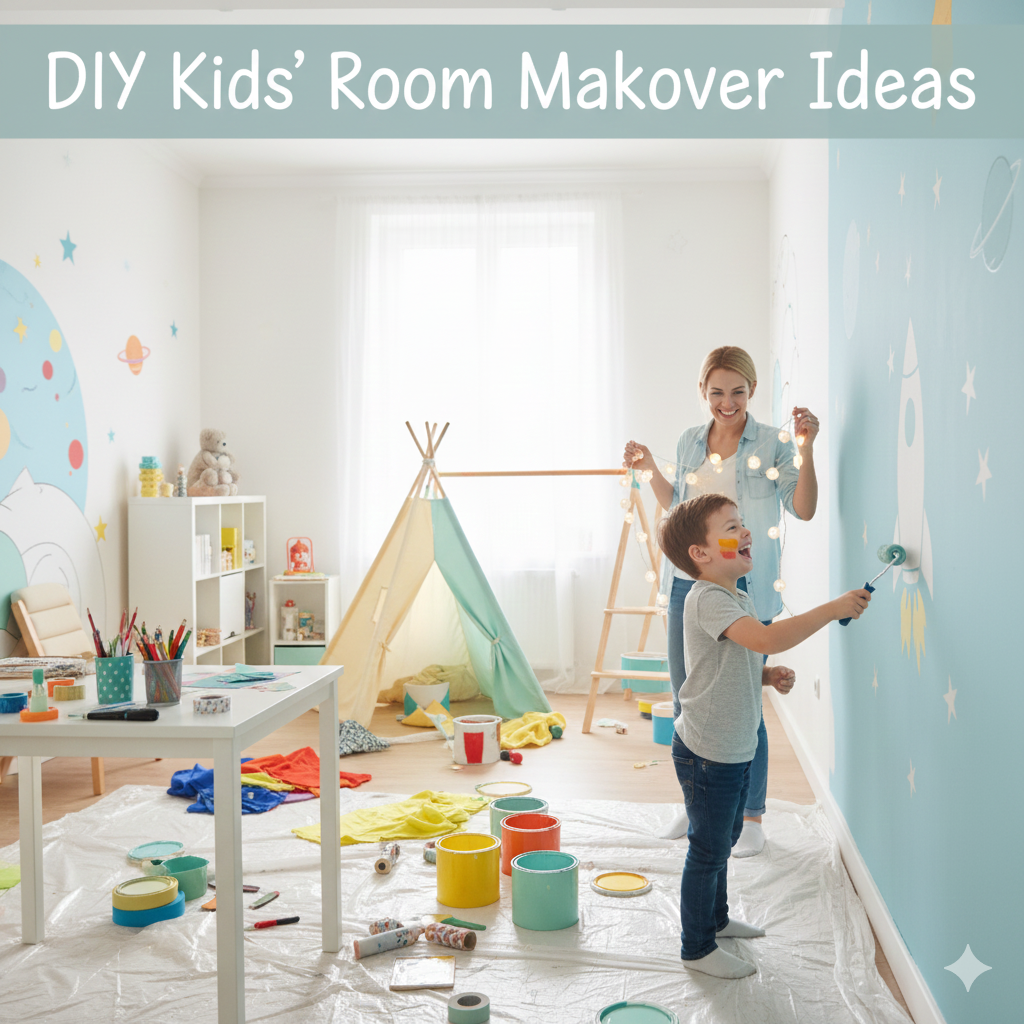
 DIY Kids’ Room Makeover Ideas
A child’s room is more than just four walls and a bed. It’s their little universe—a place where they play, learn, dream, and rest. The challenge for parents is creating a space that feels fun and imaginative while still being practical and easy to maintain. Kids grow quickly, and their needs change just as fast, so the room has to adapt. The good news? With a few DIY ideas, you can design a room that balances creativity with function, giving your child a space they’ll love today and tomorrow.
 Step 1: Start with a Flexible Layout
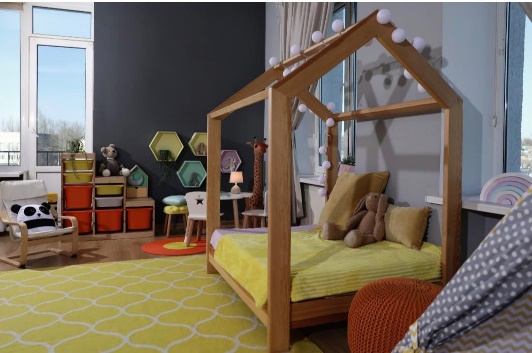
Kids need space to move, play, and explore. Push the bed against a wall to free up floor space, and keep furniture lightweight so it can be rearranged as they grow. Think of the room as a stage that changes with each “act” of their childhood.
For inspiration, rearrange furniture for better flow.
Step 2: Choose Playful but Practical
Colors
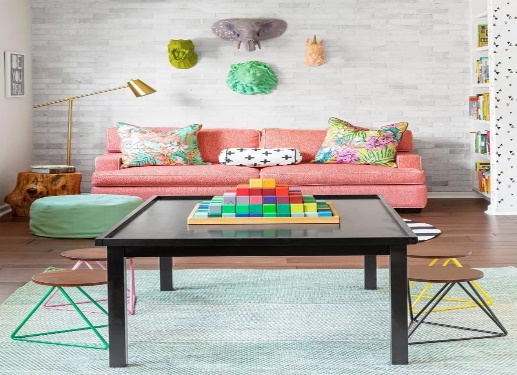
Bright colors spark imagination, but too many can feel overwhelming. The trick is balance: use a neutral base like soft gray or beige, then add pops of cheerful colors in cushions, rugs, or wall art. This way, the room feels lively but not chaotic.
For guidance, see Choosing Color Palettes That Work.
Step 3: Create Zones for Different Activities
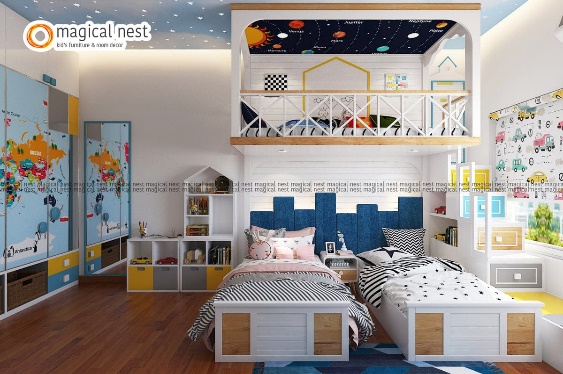 Children thrive when their environment is organized. Divide the room into zones: a cozy corner for sleep, a rug for playtime, and a desk for study. This structure helps kids know where each activity belongs, making the room both fun and functional.
For clever ideas, check Organizing Small Spaces Without Sacrificing Style.
Step 4: Add Storage That Kids Can Use
Storage should be accessible to little hands. Colorful bins, baskets, and low shelves encourage kids to tidy up themselves. It’s not just practical—it teaches responsibility and independence.
Step 5: Layer Lighting for Play and Rest
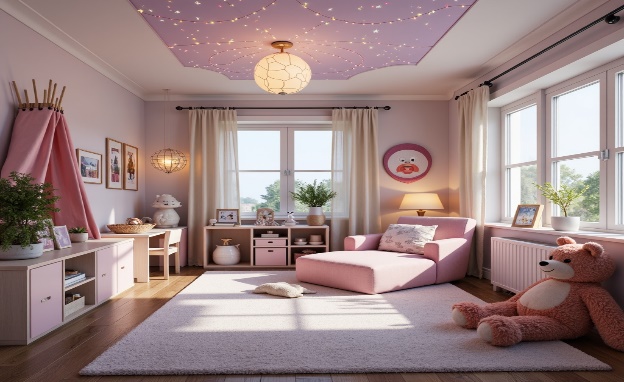
Lighting sets the mood. Kids need bright light for play and homework, but softer light for winding down at night. Combine ceiling lights with bedside lamps and fun string lights to create flexibility.
For inspiration, see DIY Accent Lighting Ideas.
Step 6:Encourage Creativity with a Wall Space
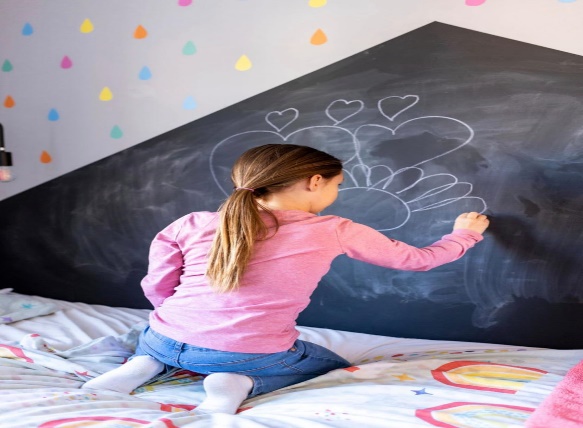
Give your child a wall to make their own. Chalkboard paint, corkboards, or a gallery of their artwork turns the room into a canvas for imagination. It’s a simple DIY project that makes the space feel personal and inspiring.
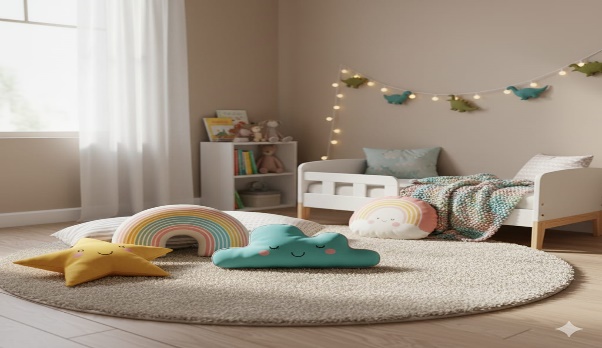
Step 7: Use Textures for Comfort
Comfort is tactile. A soft rug, cozy blankets, and cushions make the room inviting. Mixing textures adds warmth and makes the space feel safe and fun.
For more tips, see Mixing Textures and Patterns in Your Space.
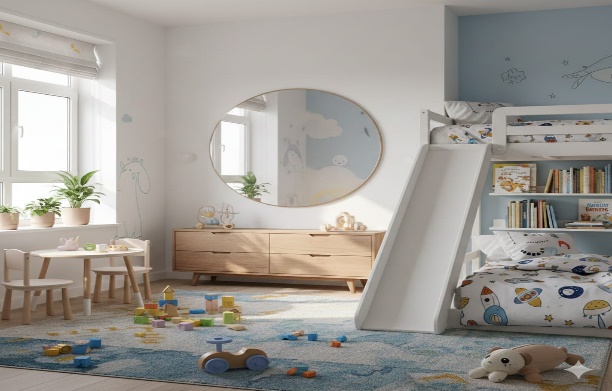 Step 8: Add Mirrors to Expand Space
Mirrors aren’t just for adults. A playful mirror in a fun shape can make the room feel bigger and brighter while doubling as decor.
For ideas, check How to Use Mirrors to Expand Space and Light.
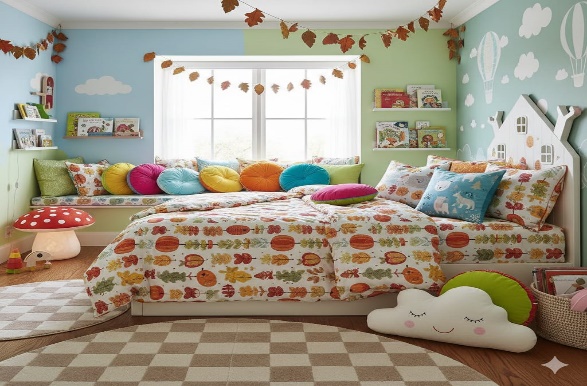 Step 9: Seasonal Touches Keep It Fresh
Kids love change. Rotate bedding, cushions, or wall art with the seasons to keep the room exciting. It’s a simple way to refresh the space without major changes.
For inspiration, see Seasonal Decorating Ideas for Every Room.
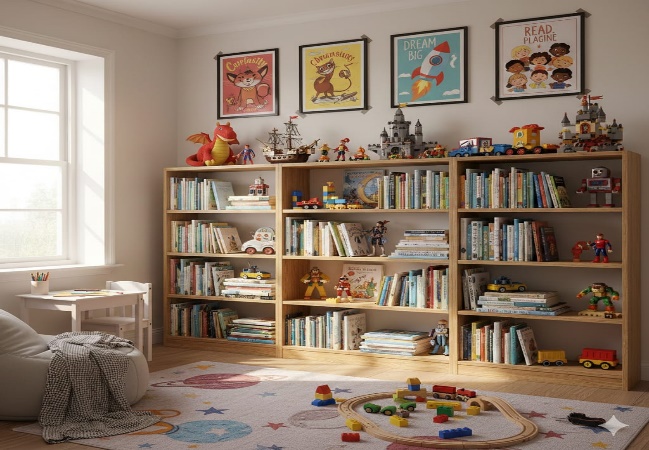 Step 10: Make It Personal
The best rooms reflect the child who lives there. Add their favorite books, toys, or posters. A personal touch makes the space feel truly theirs, not just another “decorated” room.
Final Thoughts
Designing a kids’ room is about more than furniture and paint—it’s about creating a world where your child feels safe, inspired, and free to be themselves. A flexible layout gives them space to grow, playful colors spark imagination, and smart storage keeps chaos under control. Lighting sets the mood for both play and rest, while textures and mirrors add comfort and openness. Seasonal updates keep the room fresh, and personal touches make it unique.