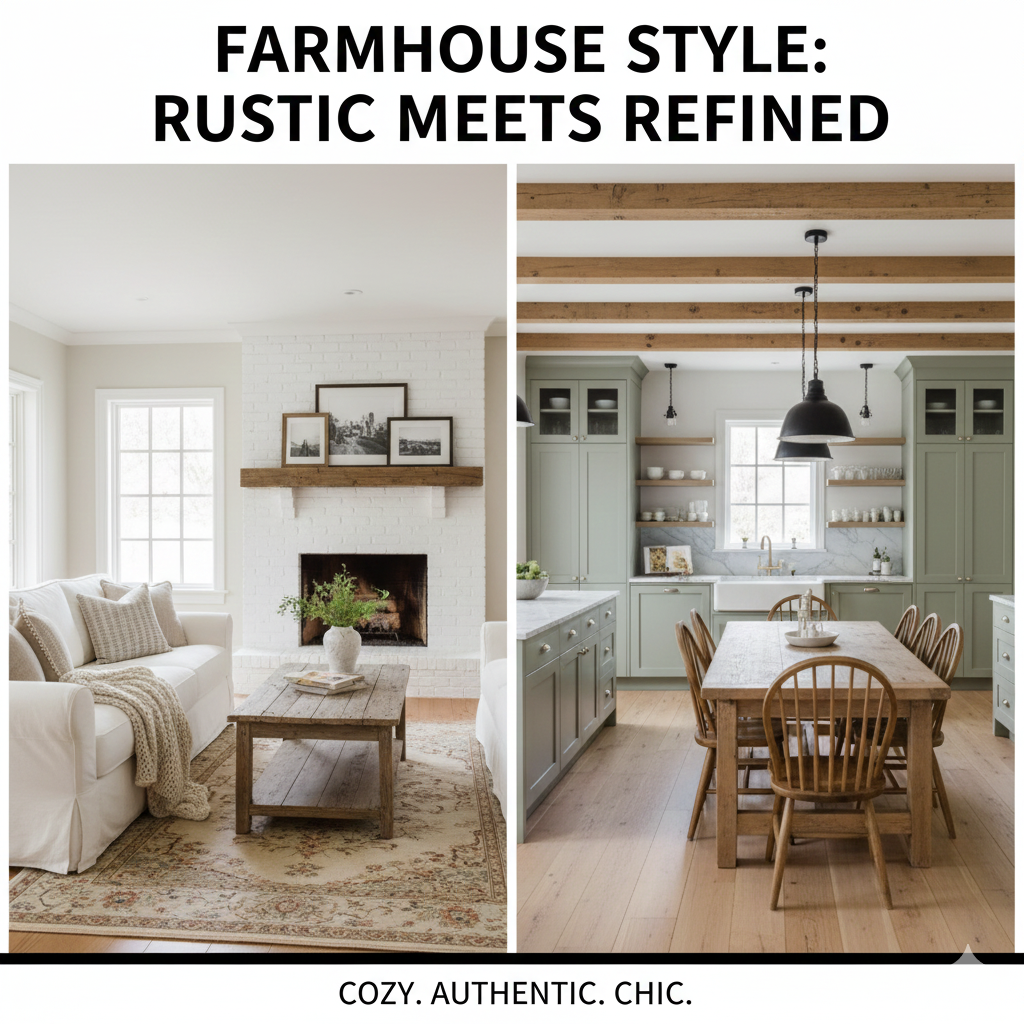
 Farmhouse style is more than rustic wood and vintage finds—it’s about creating a home that feels warm, welcoming, and refined. Rooted in traditional country living, this style blends natural materials and cozy textures with modern updates that keep it fresh. The result is a space that feels timeless, comfortable, and stylish. Think reclaimed wood tables paired with sleek lighting or vintage cabinets balanced with crisp white walls.
Step 1: Start with a Neutral Foundation
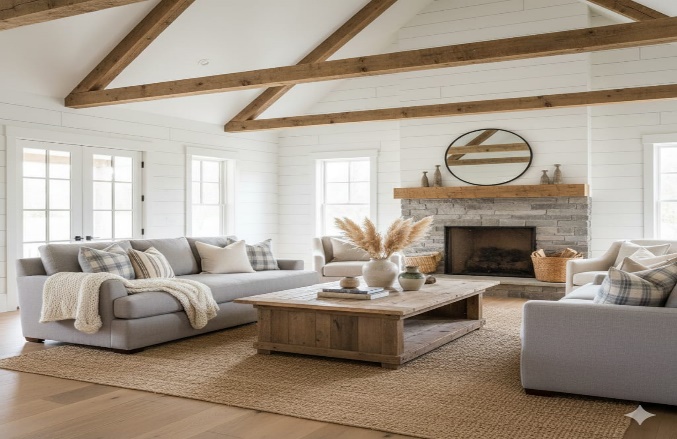
Farmhouse interiors thrive on whites, creams, and soft grays. These tones create a calm backdrop where rustic wood and vintage accents can shine. Neutral walls also make spaces feel brighter and more open.
For guidance, see Choosing Color Palettes That Work.
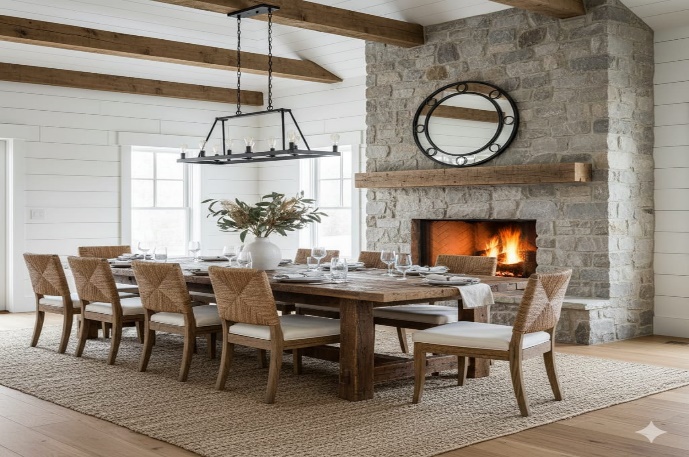 Step 2: Highlight Natural Materials
Wood, stone, and linen are staples of farmhouse design. Reclaimed wood tables, stone fireplaces, and linen curtains add authenticity and warmth. These materials connect the home to nature and history.
For inspiration, check Mixing Textures and Patterns in Your Space.
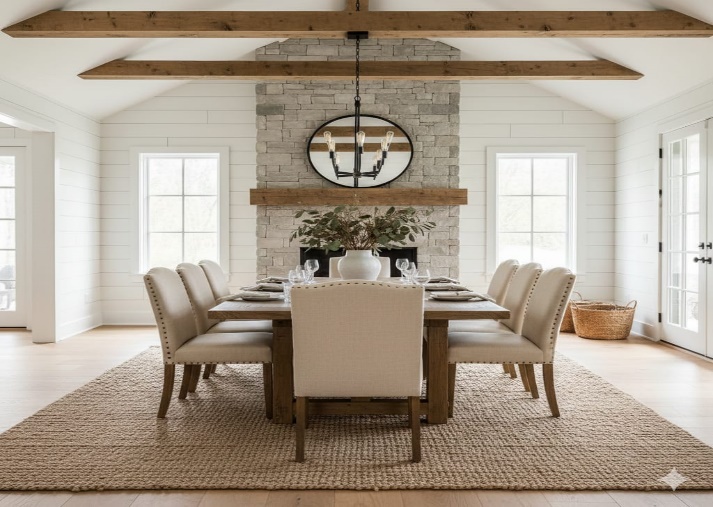 Step 3: Choose Comfortable, Functional Furniture
Farmhouse style values practicality. Opt for sturdy wooden dining tables, cozy upholstered chairs, and vintage cabinets. Furniture should feel lived‑in and inviting, not overly polished.
For ideas, see Small Room Design Hacks That Actually Work.
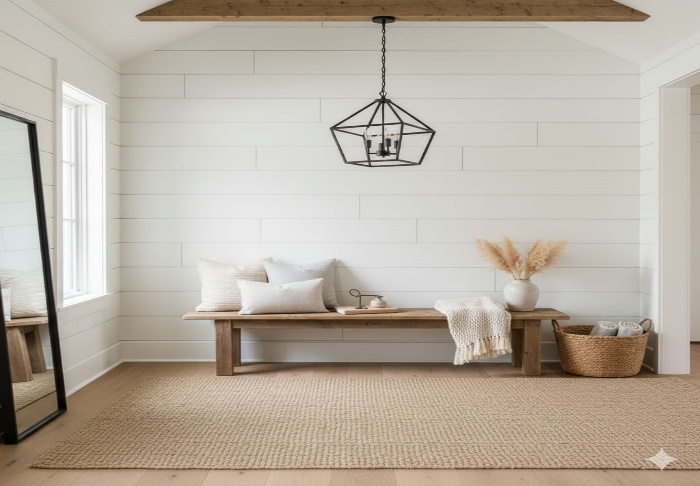
Step 4: Add Rustic Accents with Refinement
Rustic doesn’t mean rough. Balance vintage finds with refined details—a distressed cabinet paired with sleek lighting or a rustic bench topped with soft cushions. This mix keeps the look elegant.
For guidance, see Mixing Old and New: Vintage Meets Modern Decor.
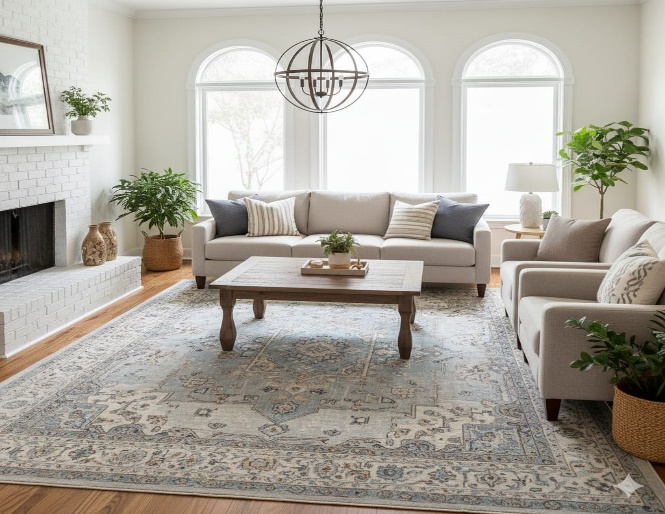 Step 5: Use Rugs to Anchor Spaces
Rugs add warmth and define zones. A woven rug under the dining table or a patterned rug in the living room makes spaces feel cozy and grounded.
For inspiration, check Using Rugs to Define and Elevate Spaces.
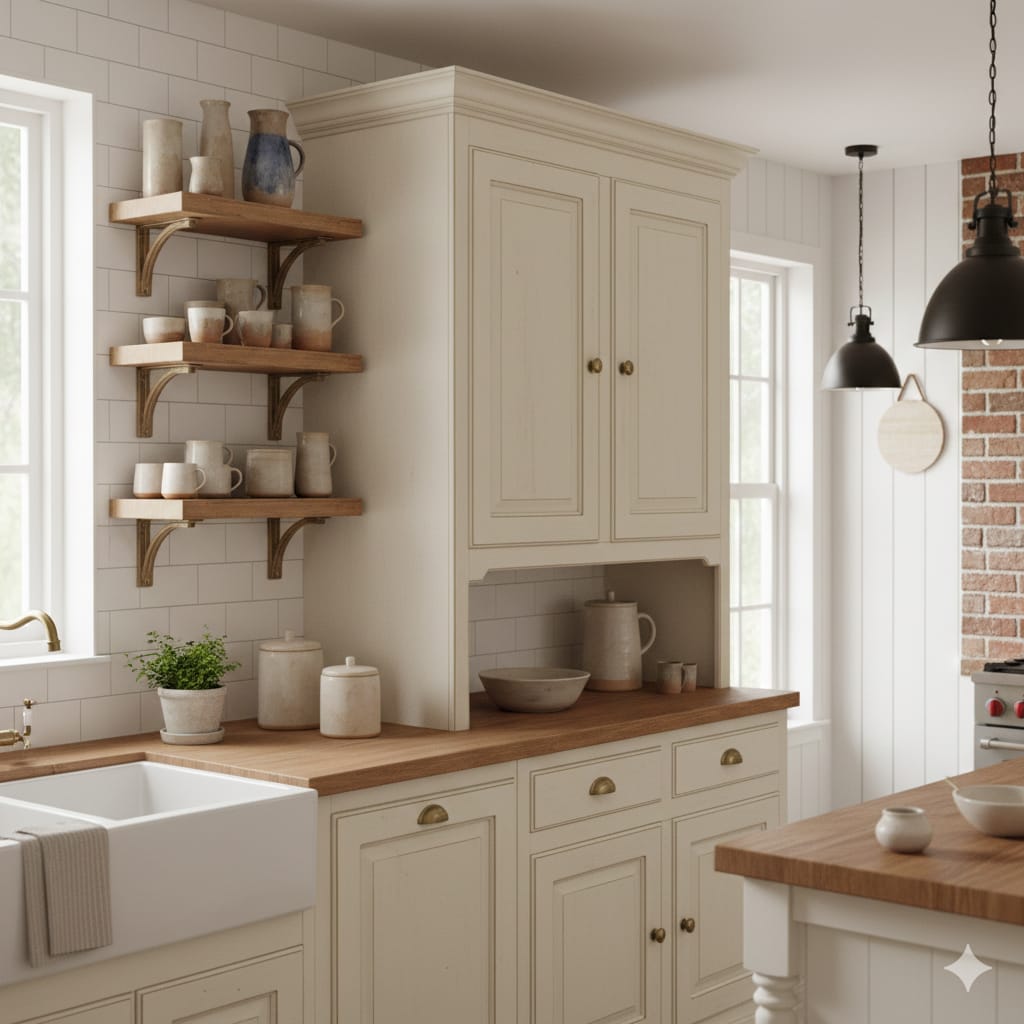
Step 6: Incorporate Vintage and Handmade Pieces
Farmhouse interiors shine with character. Vintage cabinets, handmade pottery, or flea‑market finds add soul and
authenticity. These pieces tell stories and make the space feel personal.
For ideas, see DIY Decor Projects That Make a Big Impact.
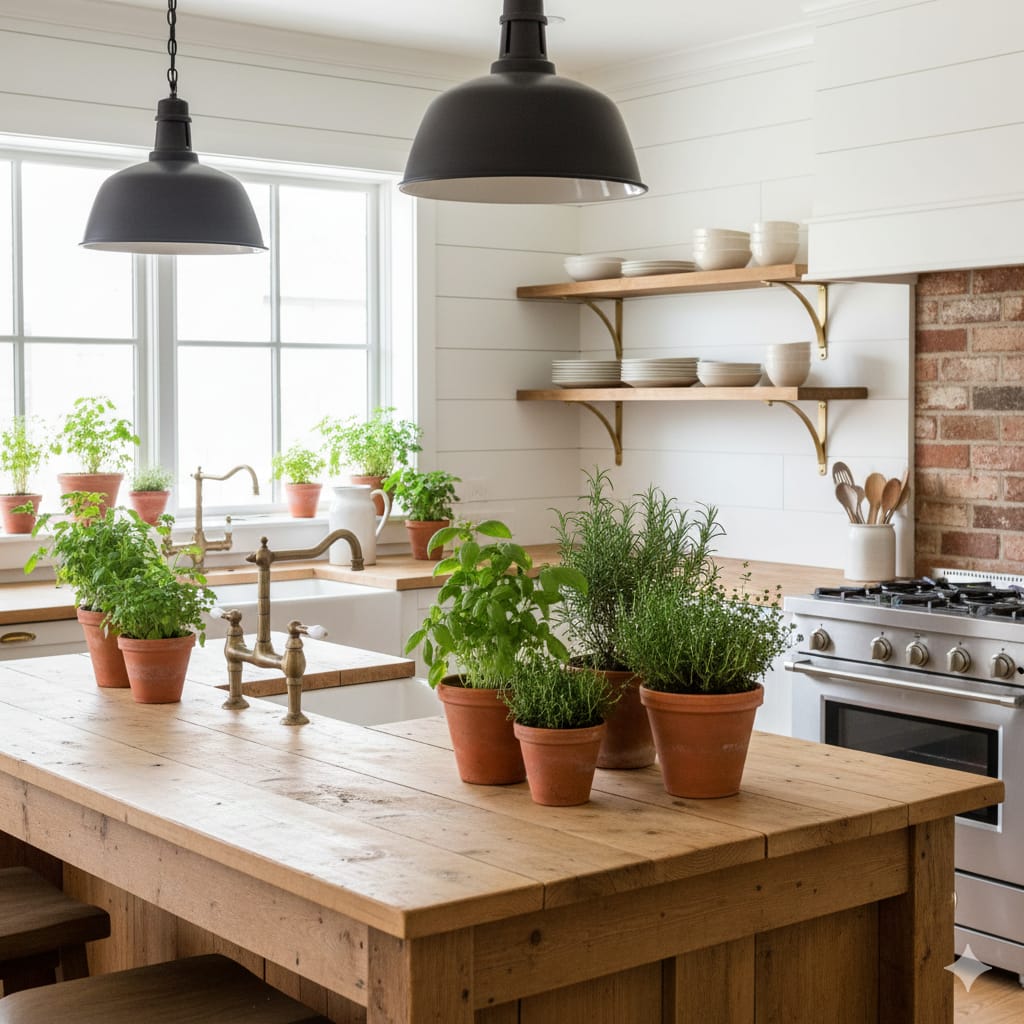 Step 7: Style with Plants and Greenery
Plants soften rustic interiors and add freshness. A tall plant in the corner or herbs in the kitchen connects the home to nature and makes it feel alive.
For guidance, see Decorating with Plants: Style + Air Quality.
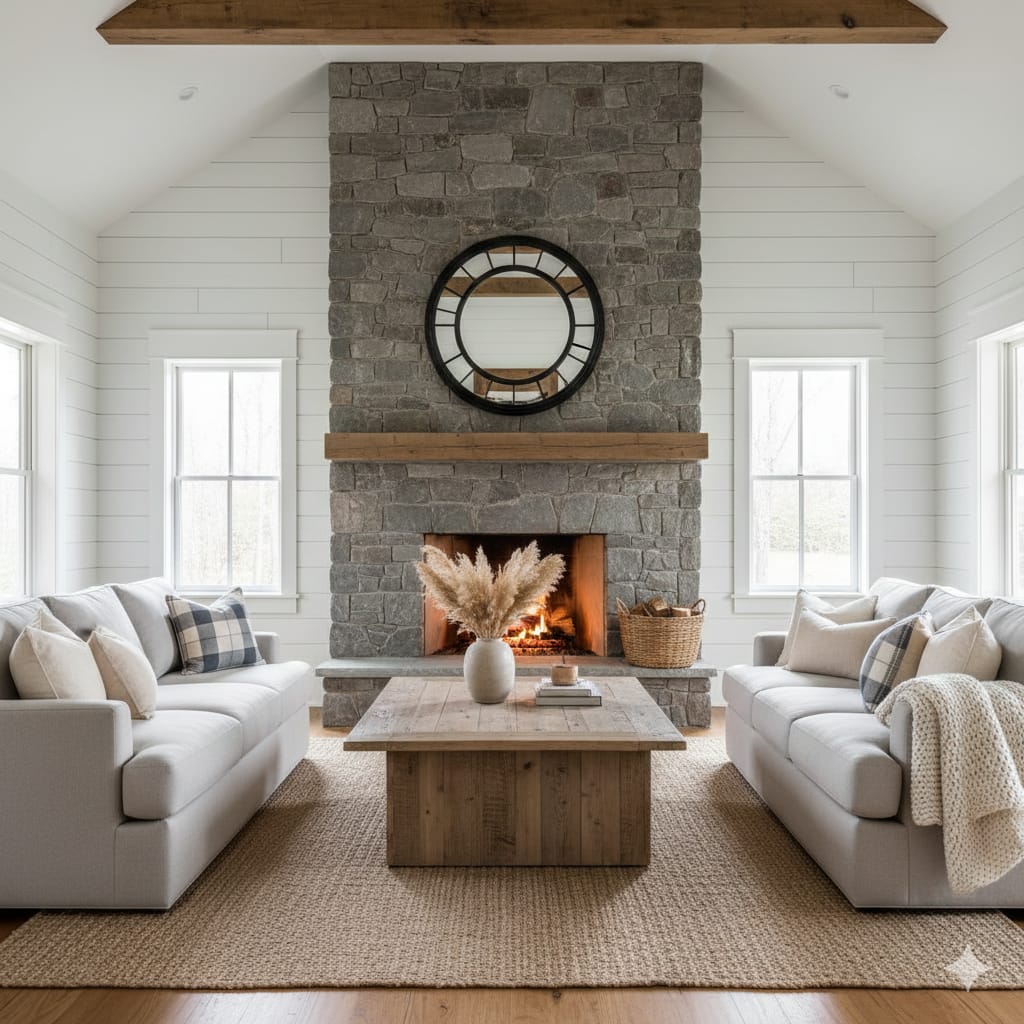
Step 8: Create a Focal Point
Every farmhouse room needs a focal point—a fireplace, a statement dining table, or a bold piece of art. This anchors the design and gives the room clarity.
For inspiration, check out How to Create a Focal Point in Any Room.
Step 9: Layer Seasonal Decor
Farmhouse style adapts beautifully to the seasons. Add cozy throws and candles in winter, fresh flowers in spring, or woven baskets in summer. Seasonal updates keep the space dyn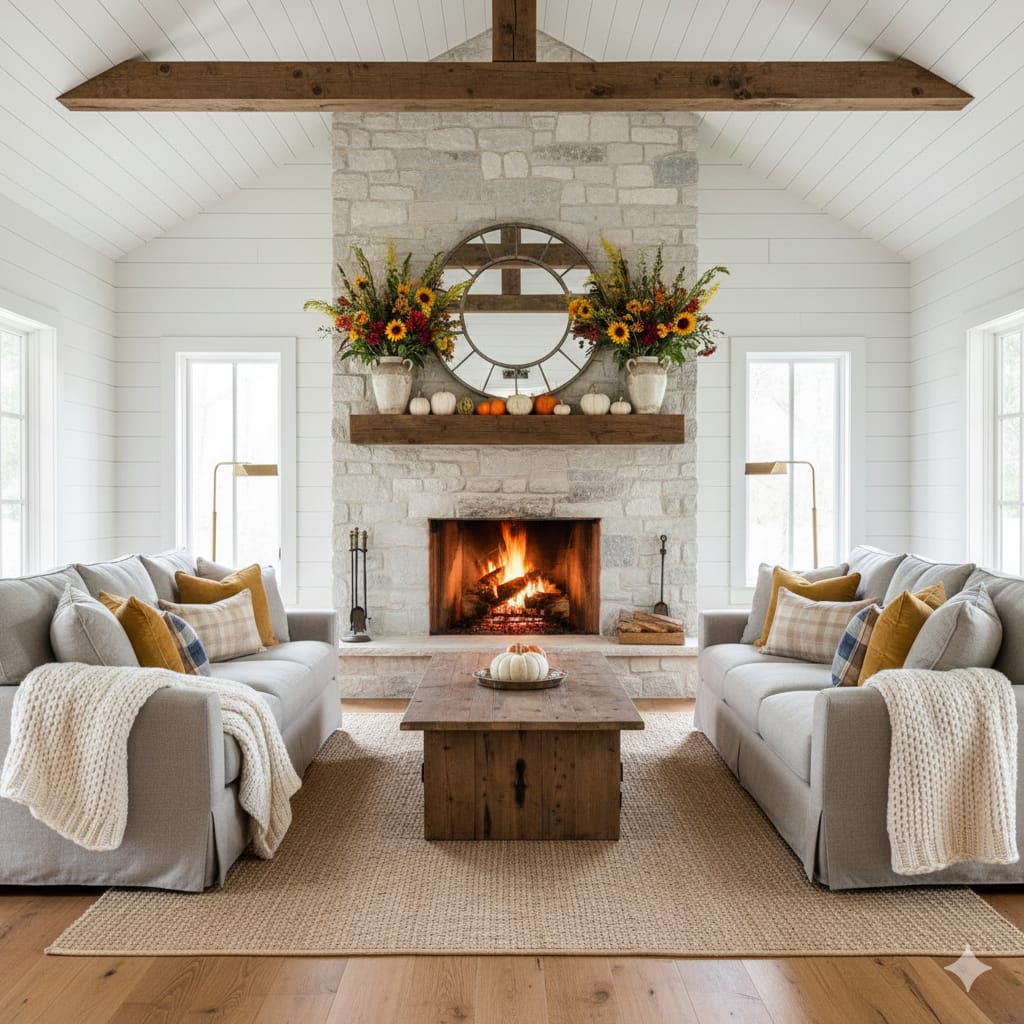 amic.
amic.
For ideas, see Seasonal Decorating Ideas for Every Room.
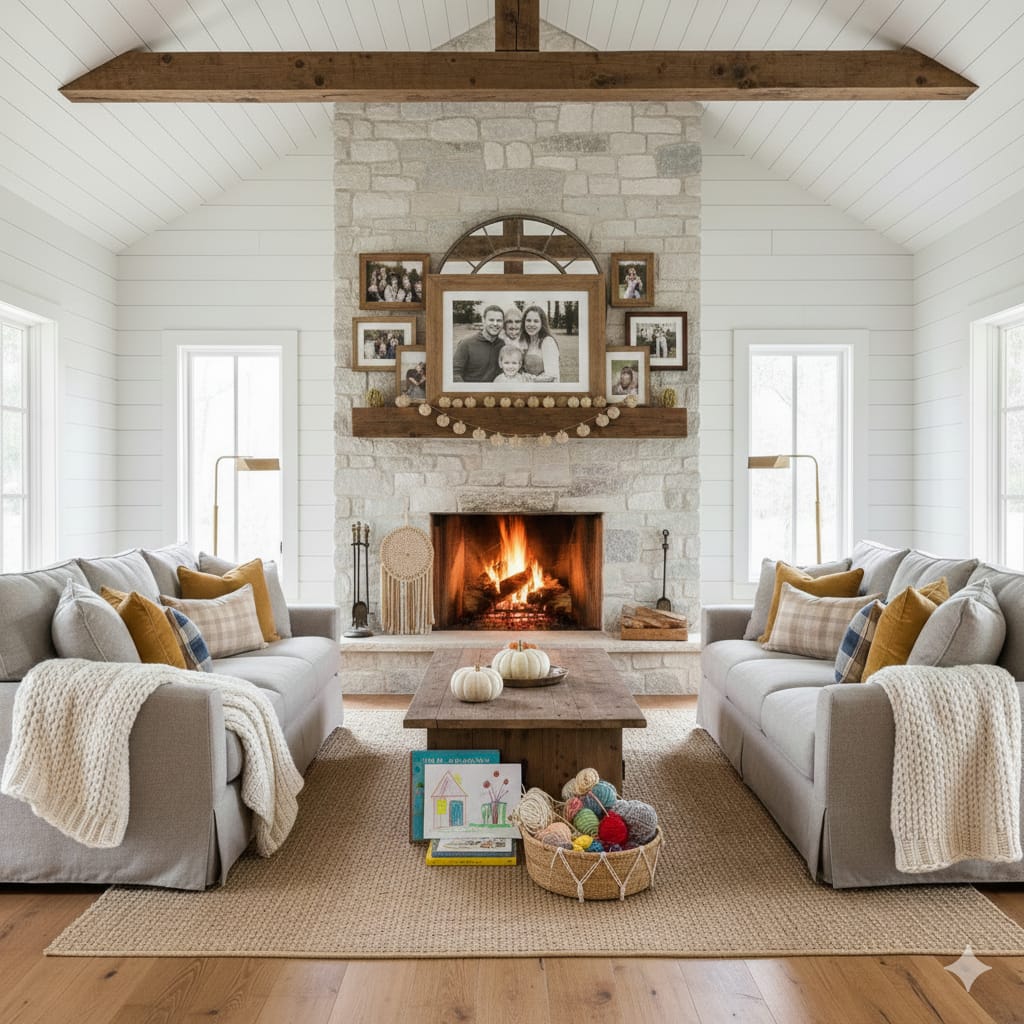
Step 10: Keep It Personal and Welcoming
The heart of farmhouse style is hospitality. Add family photos, handmade crafts, or heirloom pieces to make the space feel personal. The goal is a home that’s warm, inviting, and uniquely yours.
For guidance, see Wall Art Placement Rules Designers Swear By.
Final Thoughts
Farmhouse style blends rustic charm with refined elegance. Neutral palettes, natural materials, comfortable furniture, and vintage accents create spaces that feel timeless and welcoming. Seasonal updates and personal touches keep the look fresh and authentic.
The beauty of farmhouse design is its balance—rugged yet polished, practical yet stylish. Done right, it creates homes that feel warm, grounded, and full of character.