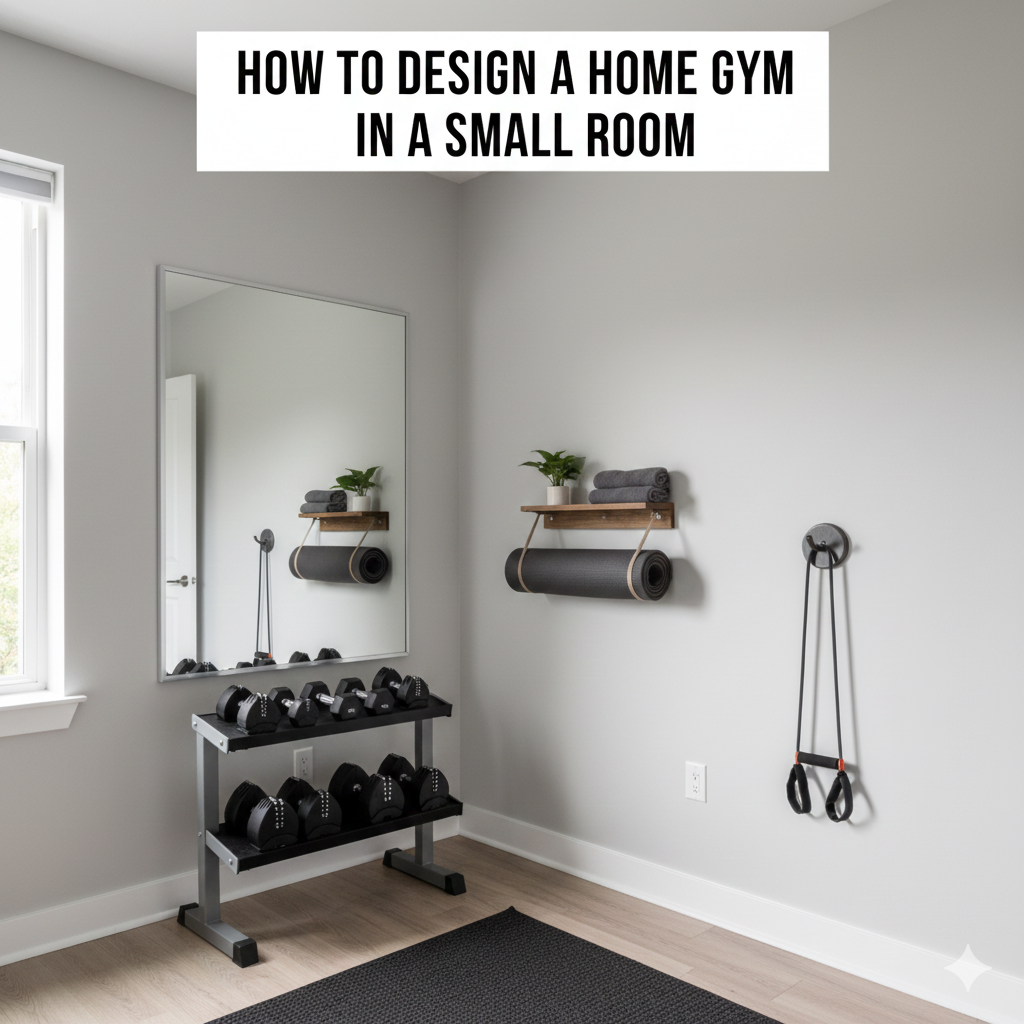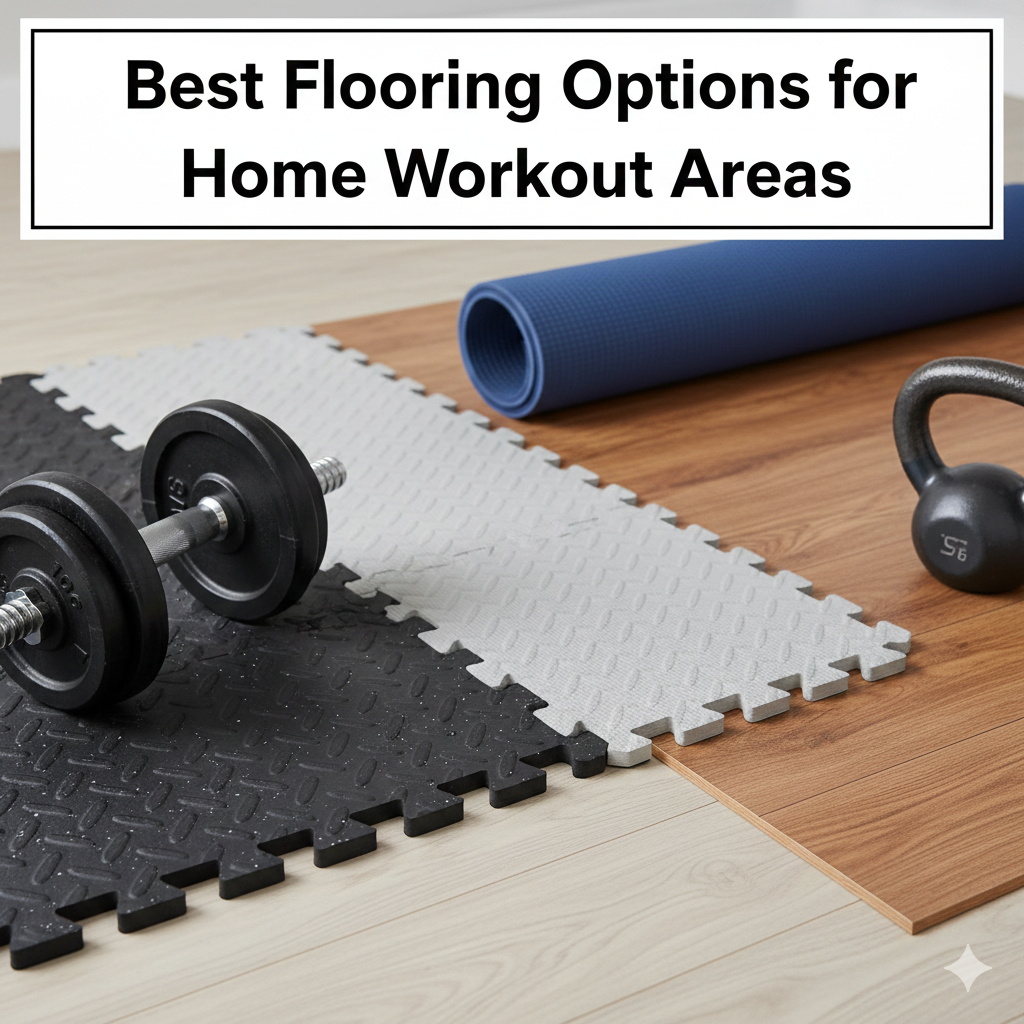
Flooring is one of the most overlooked aspects of designing a home workout area. Yet it plays a huge role in safety, comfort, and motivation. The right flooring protects your joints, cushions falls, reduces noise, and even defines the workout zone visually. In small rooms, choosing wisely ensures the space feels intentional and stylish, not just functional.
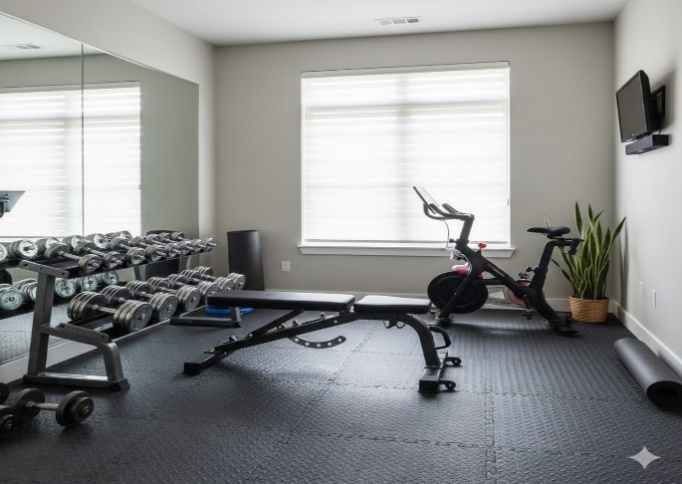 Step 1: Rubber Flooring
Rubber mats or tiles are the gold standard for home gyms. They absorb impact, protect floors, and reduce noise. Perfect for strength training or cardio workouts.
For guidance, see Room Design Mistakes to Avoid in Every Home.
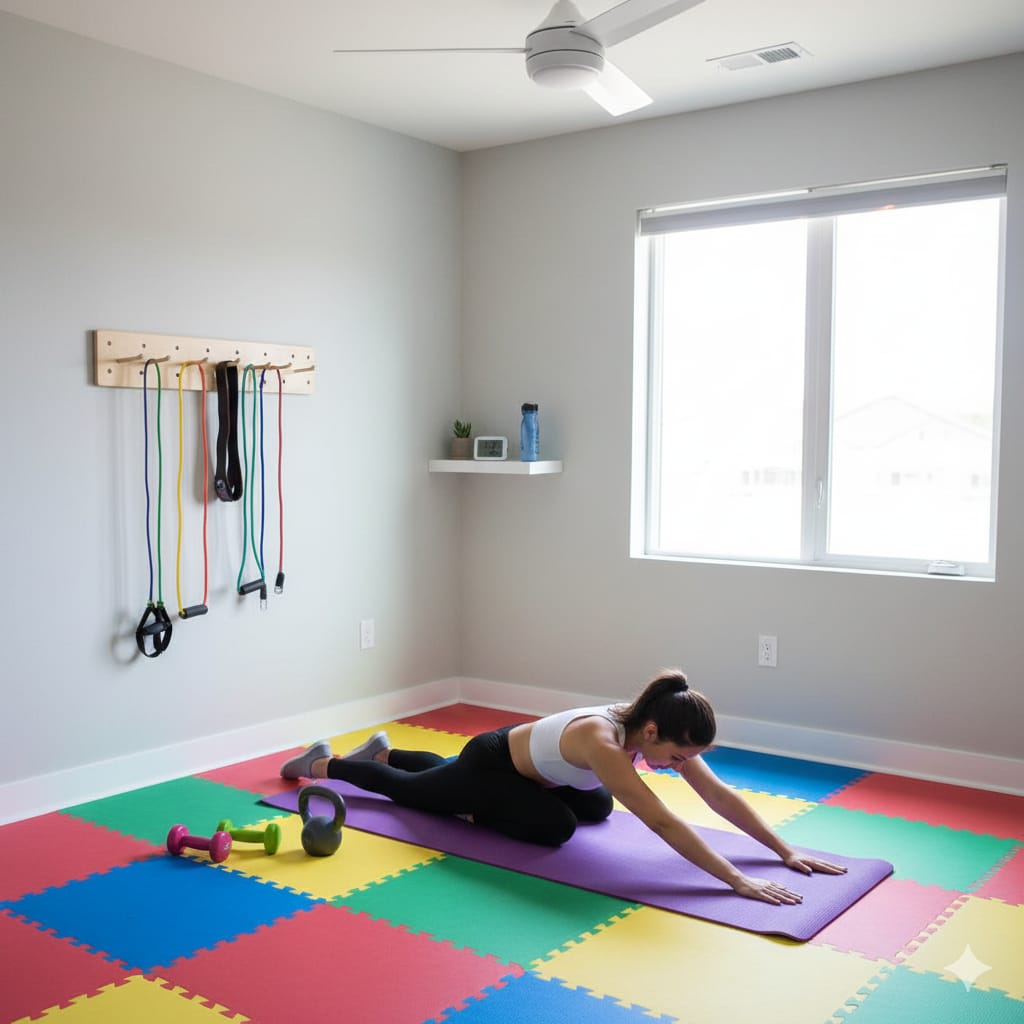
Step 2: Foam Tiles
Foam tiles are lightweight, affordable, and easy to install. They provide cushioning for yoga, pilates, or bodyweight exercises. However, they’re less durable for heavy weights.
For inspiration, check Small Room Design Hacks That Actually Work.
Step 3: Carpet Squares
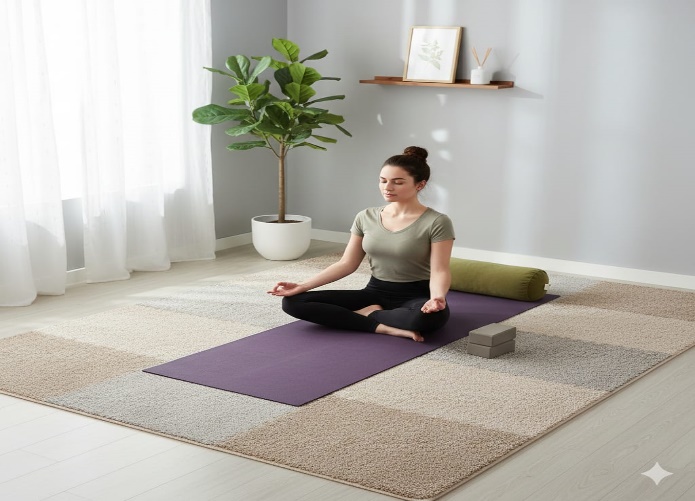 Carpet squares add warmth and comfort. They’re great for stretching or low‑impact workouts. Choose low‑pile options to avoid tripping hazards.
For guidance, see Organizing Small Spaces Without Sacrificing Style.
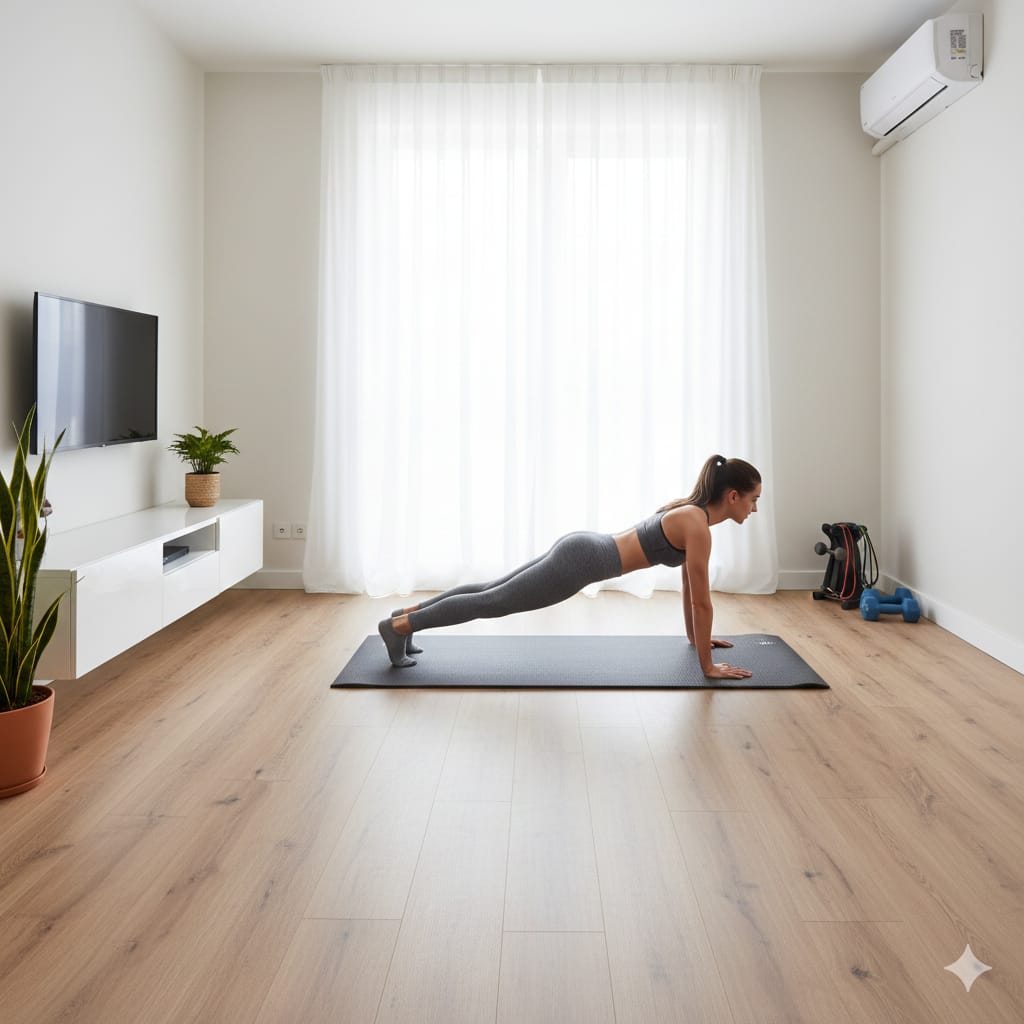 Step 4: Vinyl Flooring
Vinyl is durable, easy to clean, and stylish. It works well for multipurpose rooms where the workout area doubles as living space.
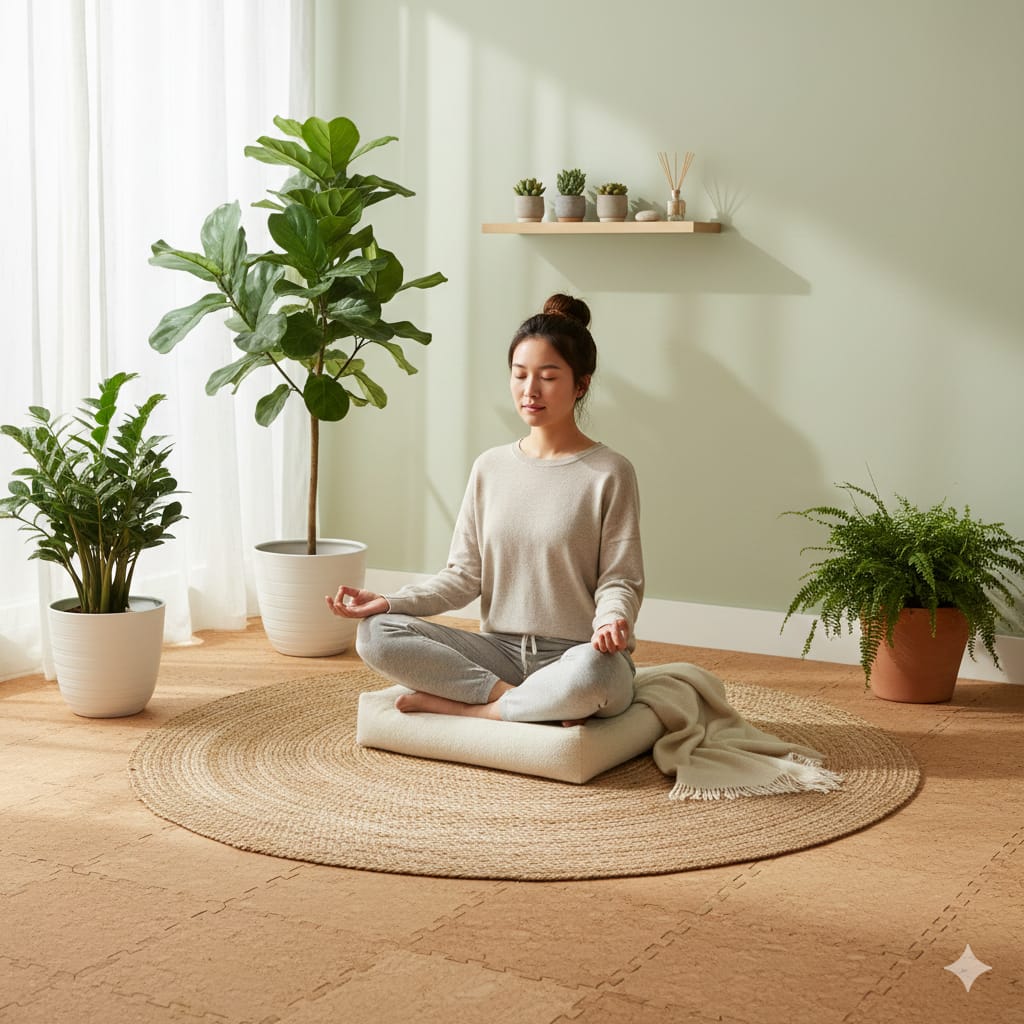
Step 5: Cork Flooring
Cork is eco-friendly, cushioned, and naturally antimicrobial. It’s ideal for yoga or meditation corners, adding warmth and sustainability.
For guidance, see Decorating with Plants: Style + Air Quality.
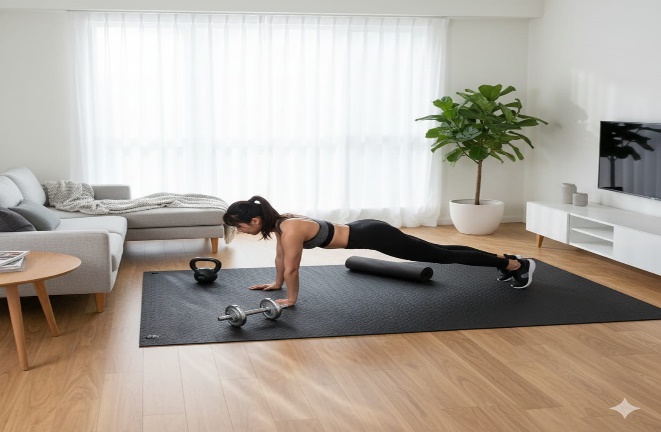 Step 6: Hardwood with Mats
Hardwood floors can work if paired with mats. They’re stylish and versatile but need protection from heavy equipment. Mats define the workout zone and prevent damage.
For inspiration, check Mixing Old and New: Vintage Meets Modern Decor.
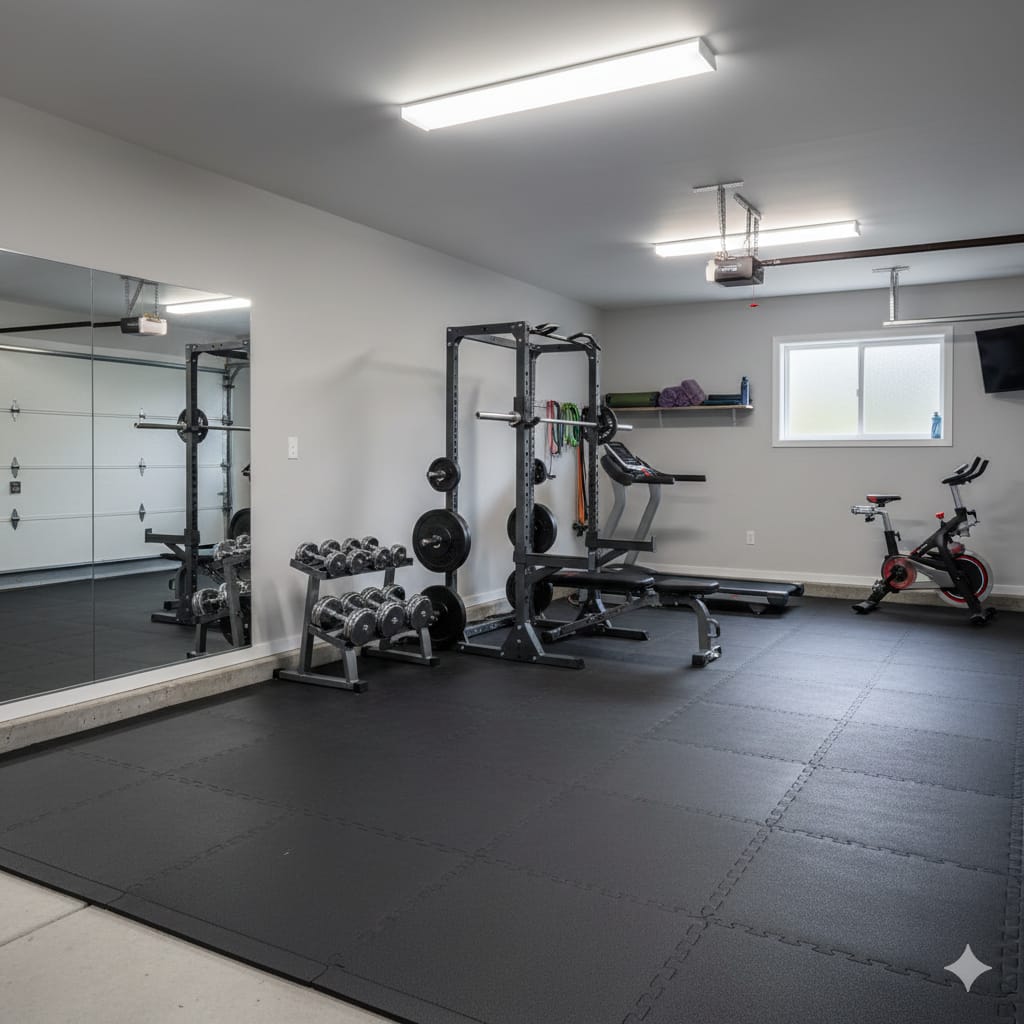
Step 7: Concrete with Coverings
Concrete is durable but hard on joints. Use mats or rugs to soften the surface. It’s common in garages or basements converted into gyms.
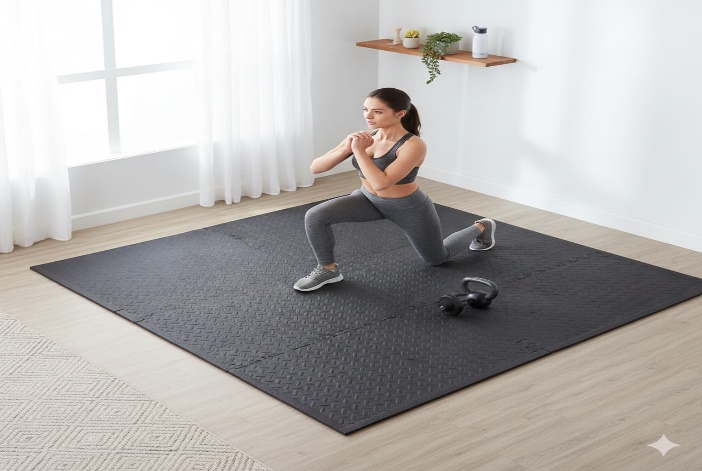 Step 8: Layered Flooring Solutions
Sometimes the best option is a mix. Rubber mats over vinyl, or foam tiles over hardwood, combine durability with comfort. Layering lets you adapt the space to different workouts.
For guidance, see Smart Furniture Choices for Tiny Homes.
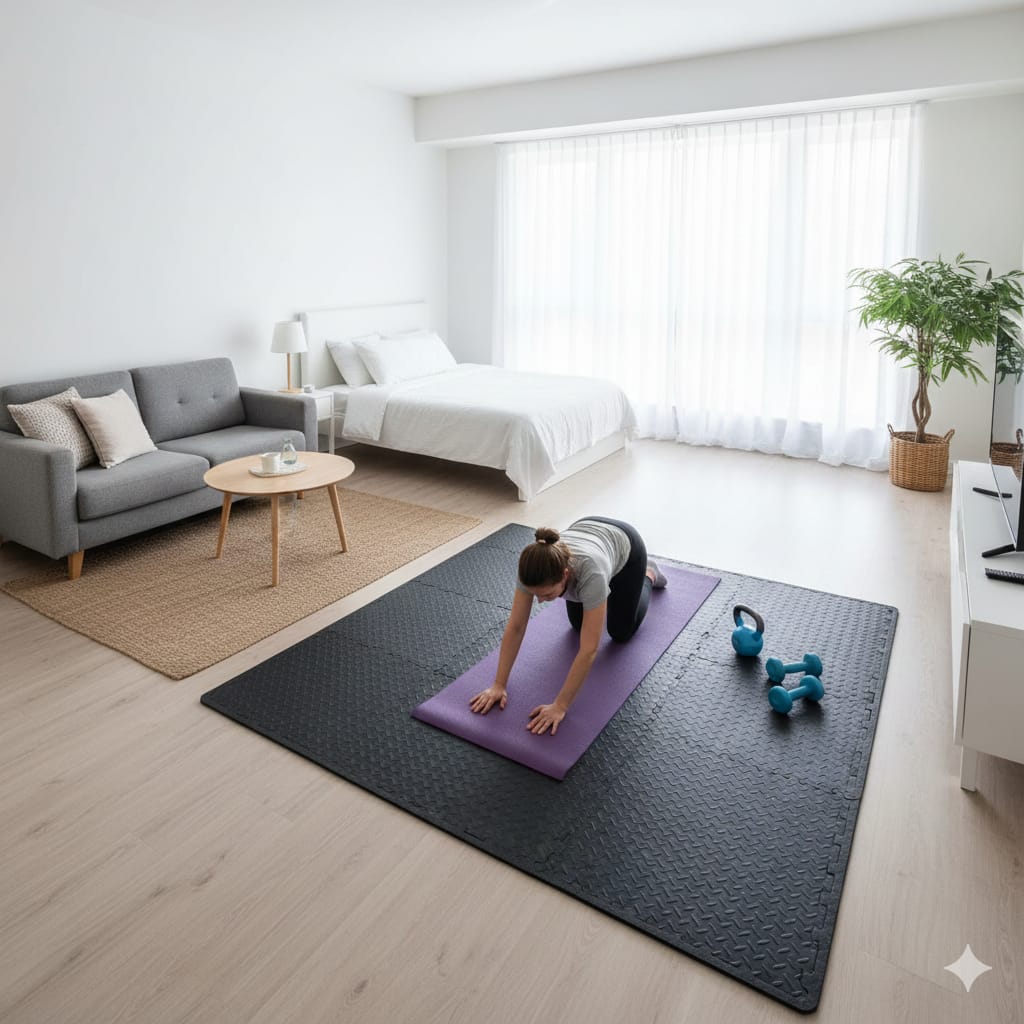 Step 9: Define Zones with Flooring
Different flooring can define zones—rubber for weights, foam for stretching, and carpet for meditation. Zoning makes small rooms feel organized and purposeful.
For inspiration, check out How to Zone Open-Plan Spaces Effectively.
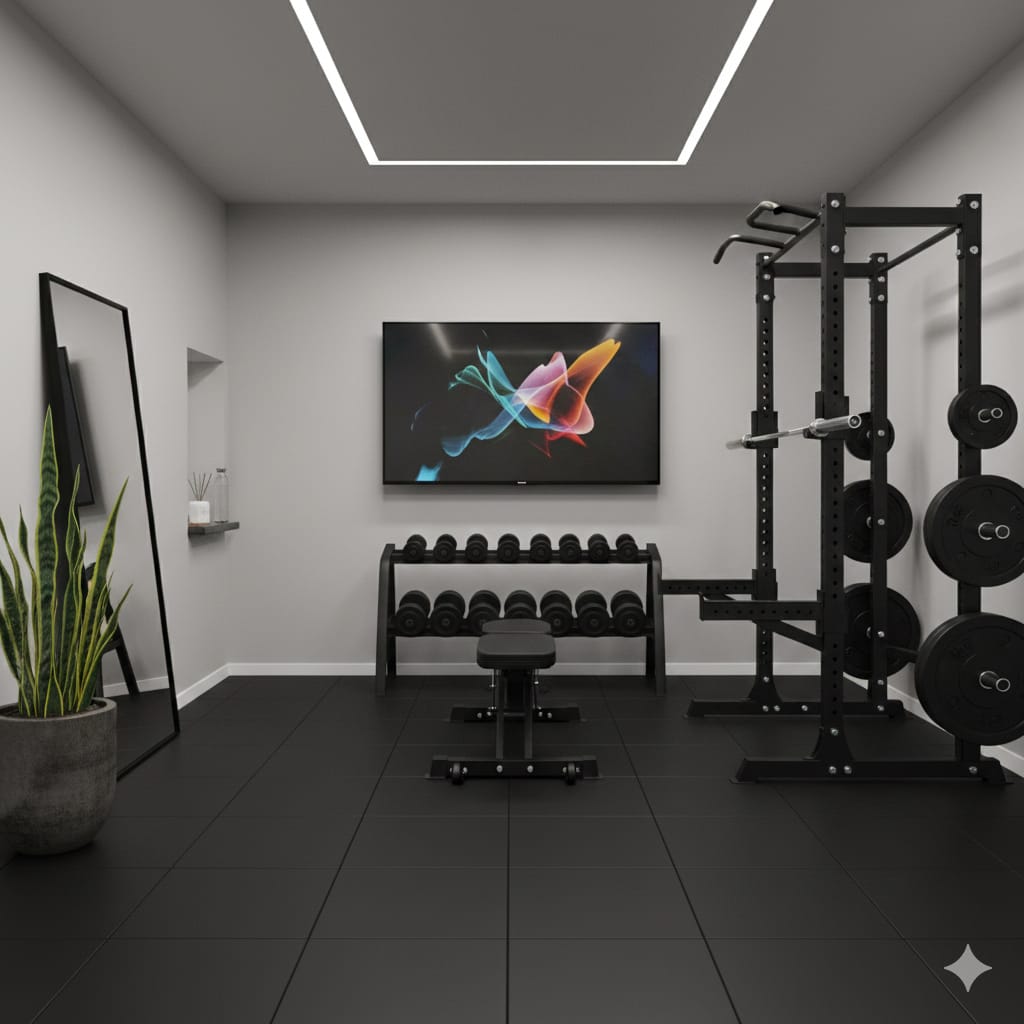 Step 10: Keep It Stylish
Flooring isn’t just functional—it’s part of the design. Choose colors and textures that complement your home. A stylish workout area motivates you to use it daily.
For guidance, see DIY Decor Projects That Make a Big Impact.
Final Thoughts
The best flooring for home workout areas depends on your goals, space, and style. Rubber, foam, vinyl, cork, hardwood, or layered solutions all have unique benefits. The key is to balance practicality with personality. Done right, your workout area becomes more than a functional corner—it becomes a motivating, stylish part of your home.