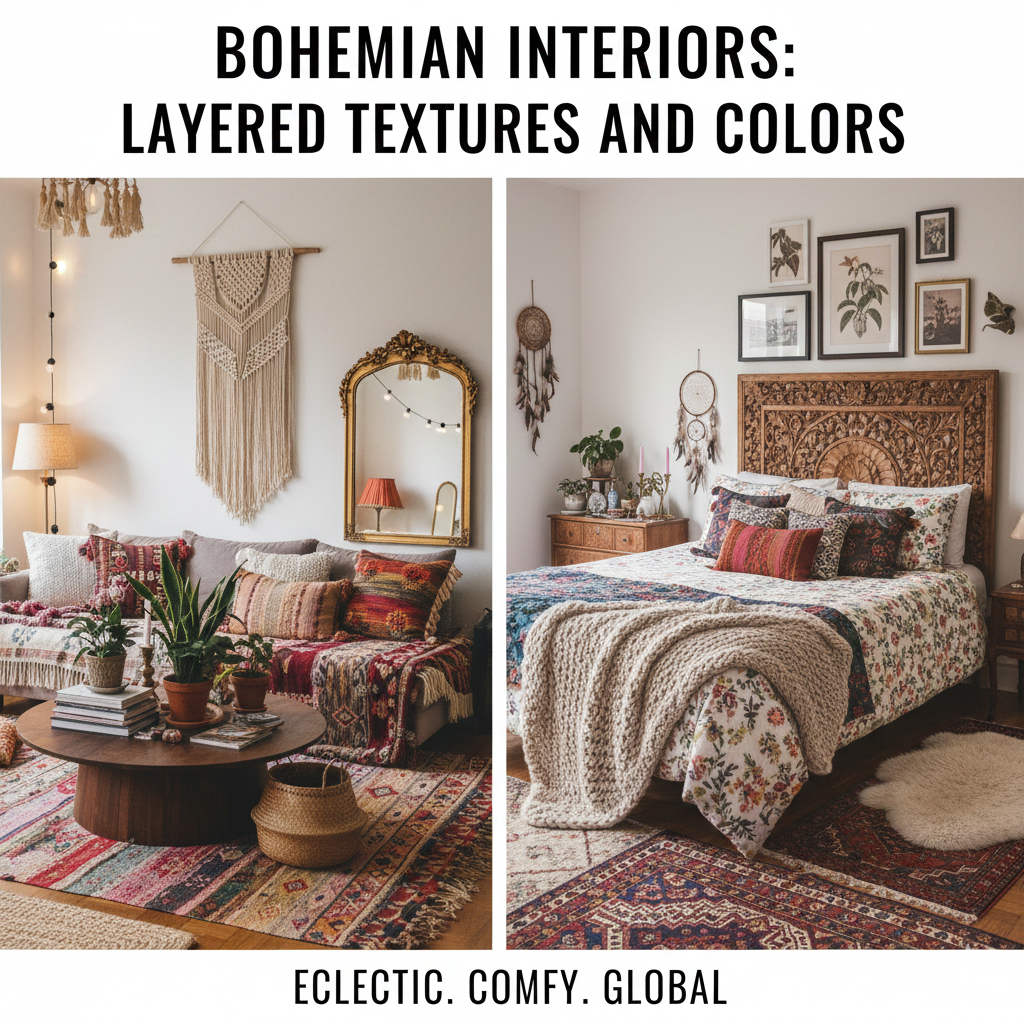
 Bohemian interiors are all about freedom, creativity, and self‑expression. Unlike rigid design styles, “boho” embraces layering, mixing, and storytelling. It’s a style that feels lived‑in, personal, and soulful. Think of it as a canvas where textures, colors, and patterns overlap to create warmth and individuality. The beauty of bohemian design is that there are no strict rules—just a celebration of comfort, culture, and creativity.
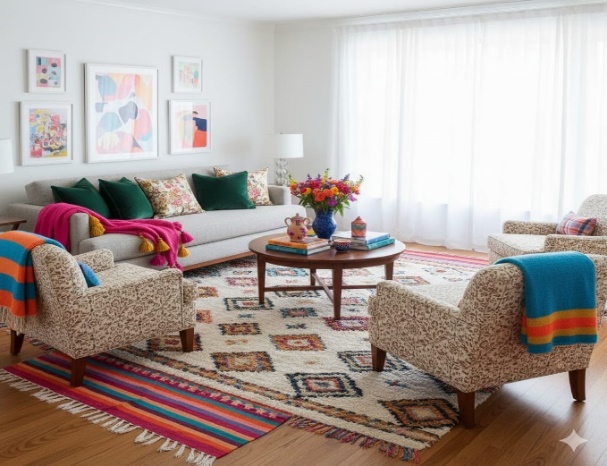
Step 1: Start with a Neutral Base
Bohemian spaces often begin with a calm foundation—white walls, wooden floors, or earthy tones. This neutral base allows bold colors and layered textures to shine without overwhelming the room.
For guidance, see Choosing Color Palettes That Work.
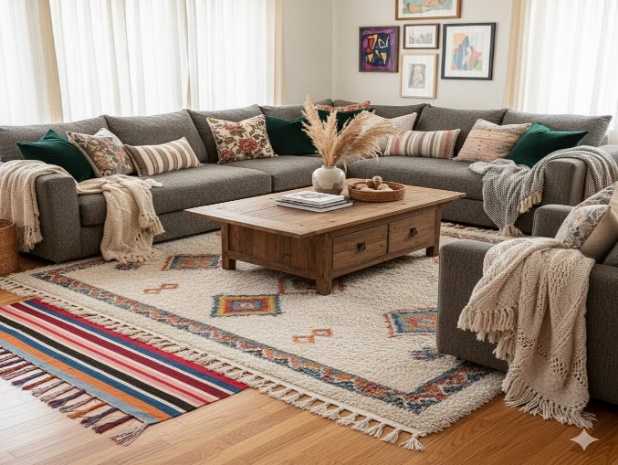 Step 2: Layer Textiles for Comfort
Textiles are the heart of boho interiors. Layer rugs, throws, and cushions in different fabrics—cotton, wool, velvet, or linen. Mixing textures creates depth and coziness.
For inspiration, check Using Rugs to Define and Elevate Spaces.
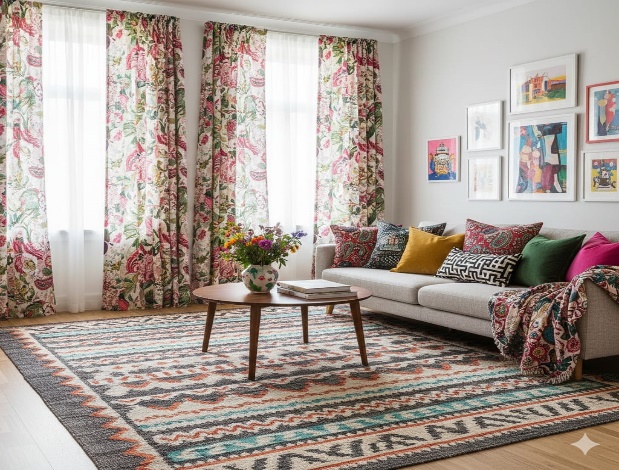 Step 3: Mix Patterns Boldly
Bohemian design thrives on pattern play. Stripes, florals, geometrics, and ethnic prints can coexist beautifully. The trick is to keep the palette harmonious so the mix feels intentional, not chaotic.
For guidance, see Mixing Textures and Patterns in Your Space.
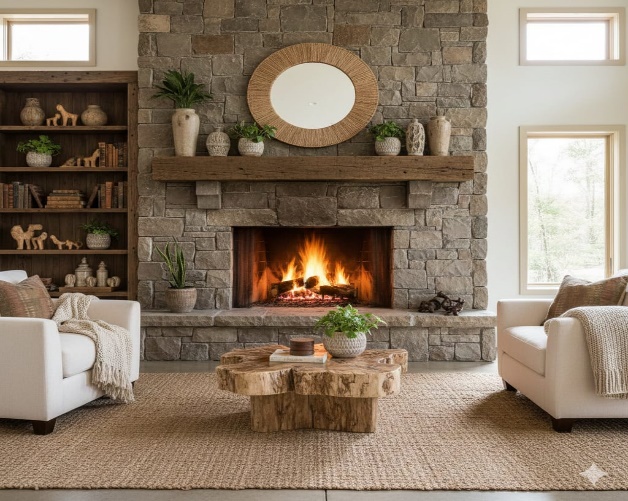
Step 4: Add Vintage and Handmade Pieces
Boho interiors celebrate individuality. Vintage furniture, handmade crafts, or flea‑market finds add soul and authenticity. Each piece tells a story, making the space feel personal.
For ideas, see Mixing Old and New: Vintage Meets Modern Decor.
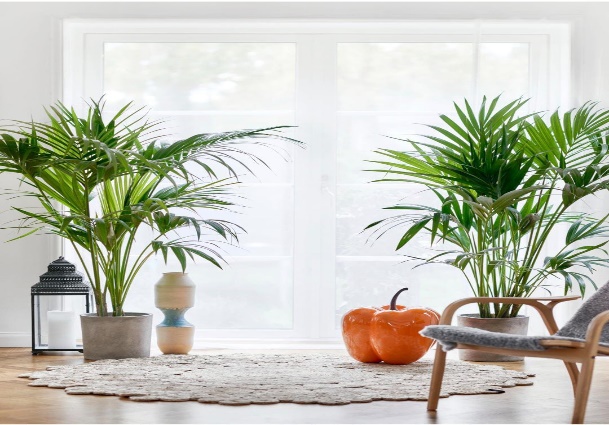 Step 5: Use Plants Generously
Greenery is essential in bohemian spaces. Plants add life, texture, and a natural element that balances bold colors. Hanging plants, tall palms, or clusters of succulents all work beautifully.
For guidance, see Decorating with Plants: Style + Air Quality.
Step 6: Create Cozy Corners
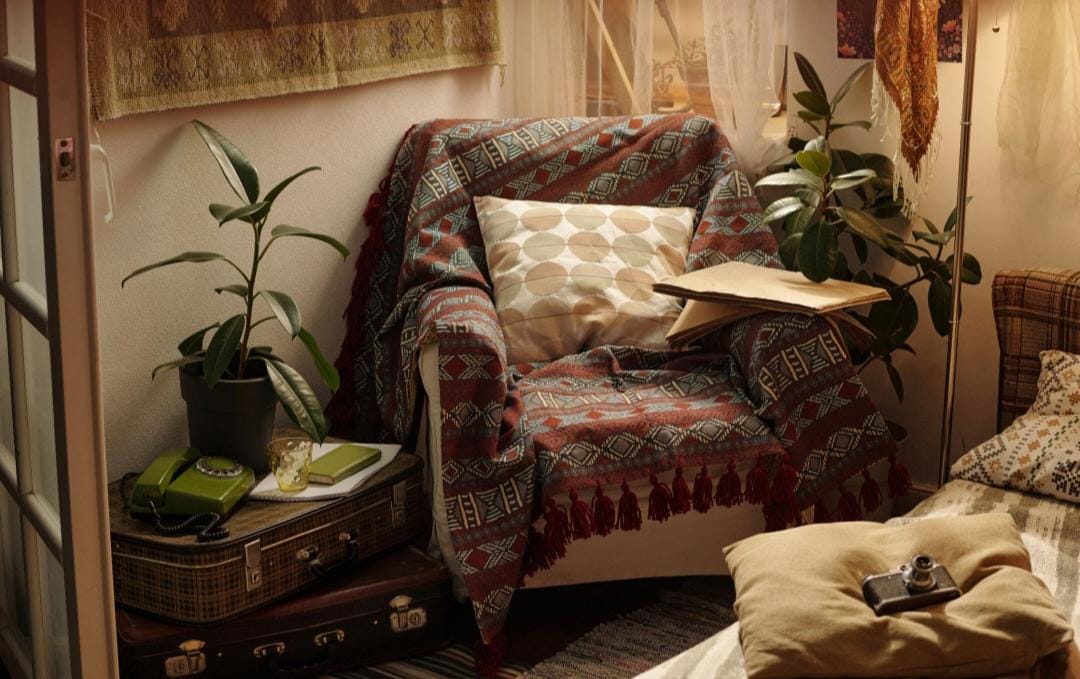 Boho interiors often feature intimate nooks—a reading corner with layered cushions, a hammock by the window, or a floor seating area with poufs. These cozy spots invite relaxation and creativity.
For inspiration, check Designing a Reading Nook That Feels Like a Retreat.
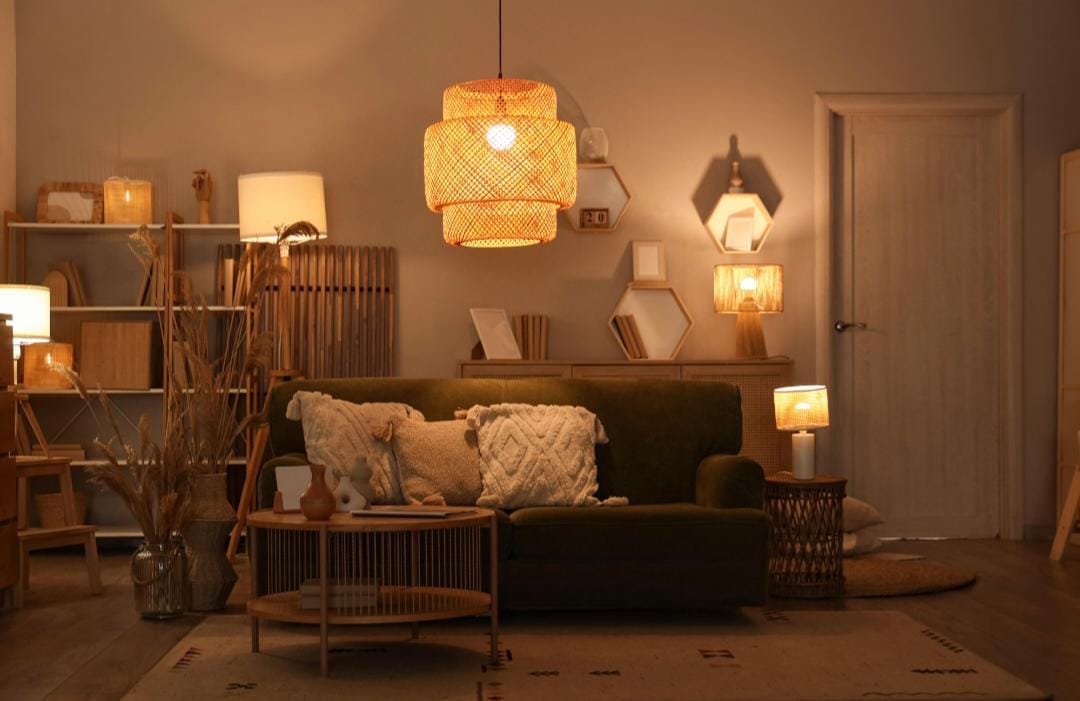 Step 7: Play with Lighting
Lighting sets the mood. Bohemian interiors favor warm, ambient light—string lights, lanterns, or woven lampshades. These create a soft glow that enhances the layered textures.
For ideas, see DIY Accent Lighting Ideas.
Step 8: Add Global Influences
Boho style often borrows from different cultures—Moroccan rugs, Indian textiles, and African baskets. These global accents add richness and diversity, making the space feel worldly and eclectic.
For guidance, see DIY Decor Projects That Make a Big Impact.
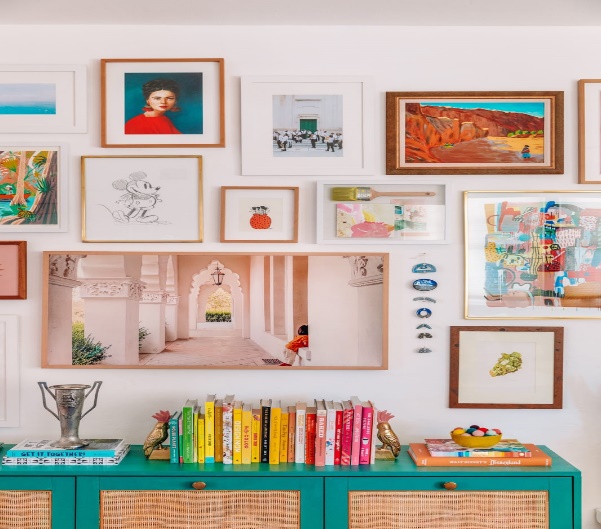
Step 9: Make Art Personal
Art in bohemian interiors doesn’t have to be expensive. Hang tapestries, display handmade crafts, or frame personal photos. The goal is to make walls feel expressive and unique.
For inspiration, check Wall Art Placement Rules Designers Swear By.
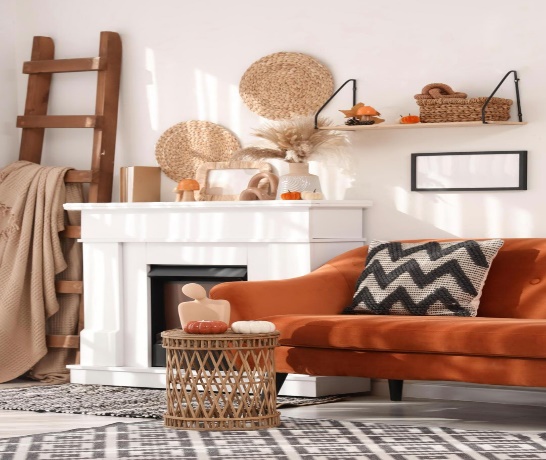 Step 10: Keep It Flexible and Evolving
Bohemian interiors aren’t static. They evolve with your life — new travels, new finds, new moods. Rotate textiles seasonally, swap art, or rearrange furniture. Flexibility keeps the space fresh and authentic.
For ideas, see Seasonal Decorating Ideas for Every Room.
Final Thoughts
Bohemian interiors are about freedom, creativity, and individuality. Layered textiles, bold patterns, vintage finds, plants, and global accents create spaces that feel soulful and inviting. The beauty of boho style is that it celebrates imperfection—mismatched cushions, handmade crafts, or eclectic collections all add character.
Done right, bohemian design feels warm, personal, and endlessly inspiring. It’s not about following rules; it’s about telling your story through colors, textures, and objects that make you feel at home.